Historical Background
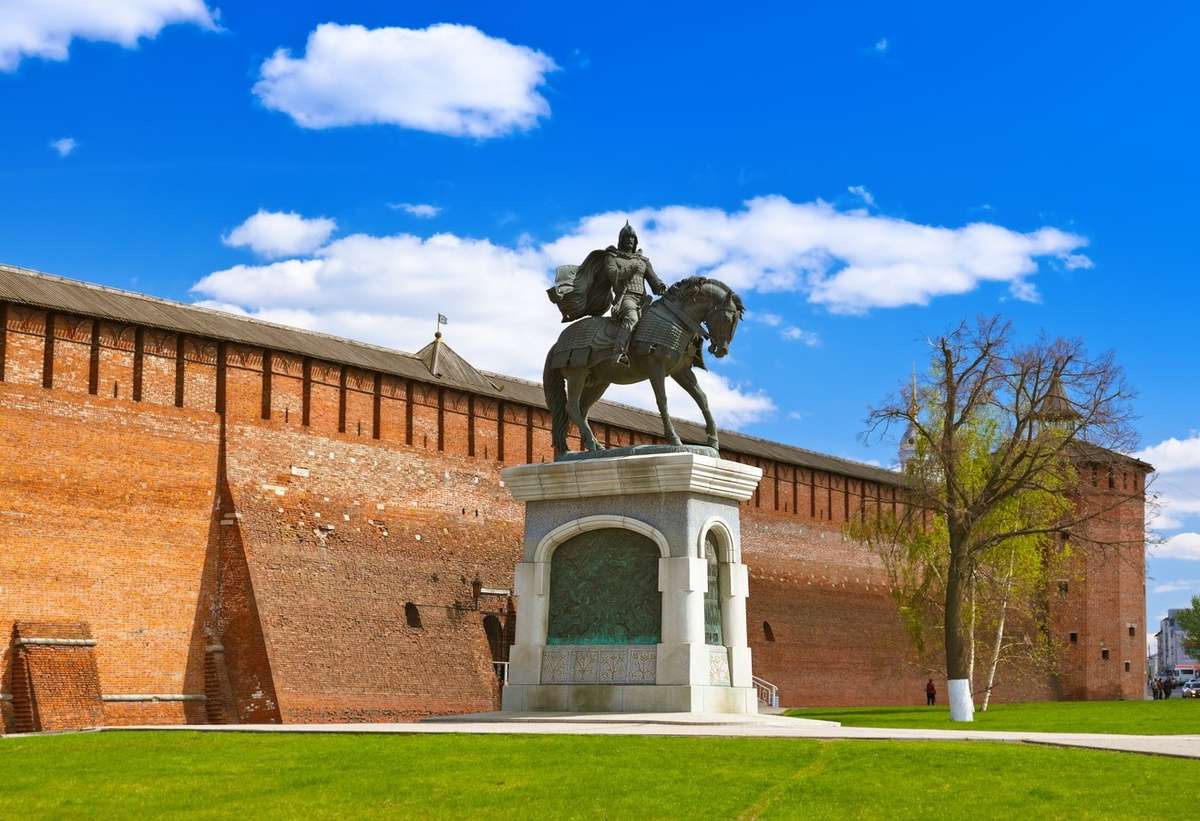
The history of Kolomna's cathedral begins in the 14th century. The first white-stone building was presumably erected around 1329; fragments of its foundation were found by archaeologists in the 1980s. A new church was founded in 1379 at the initiative of Grand Prince Dmitry Donskoy after the Russian victory on the Vozha River. This second building was one of the largest stone churches of its time, and it was probably painted by Theophanes the Greek. It housed Kolomna's chief treasure, the Don Icon of the Mother of God, before which Ivan the Terrible prayed ahead of his Kazan campaign.
The 17th-Century Cathedral
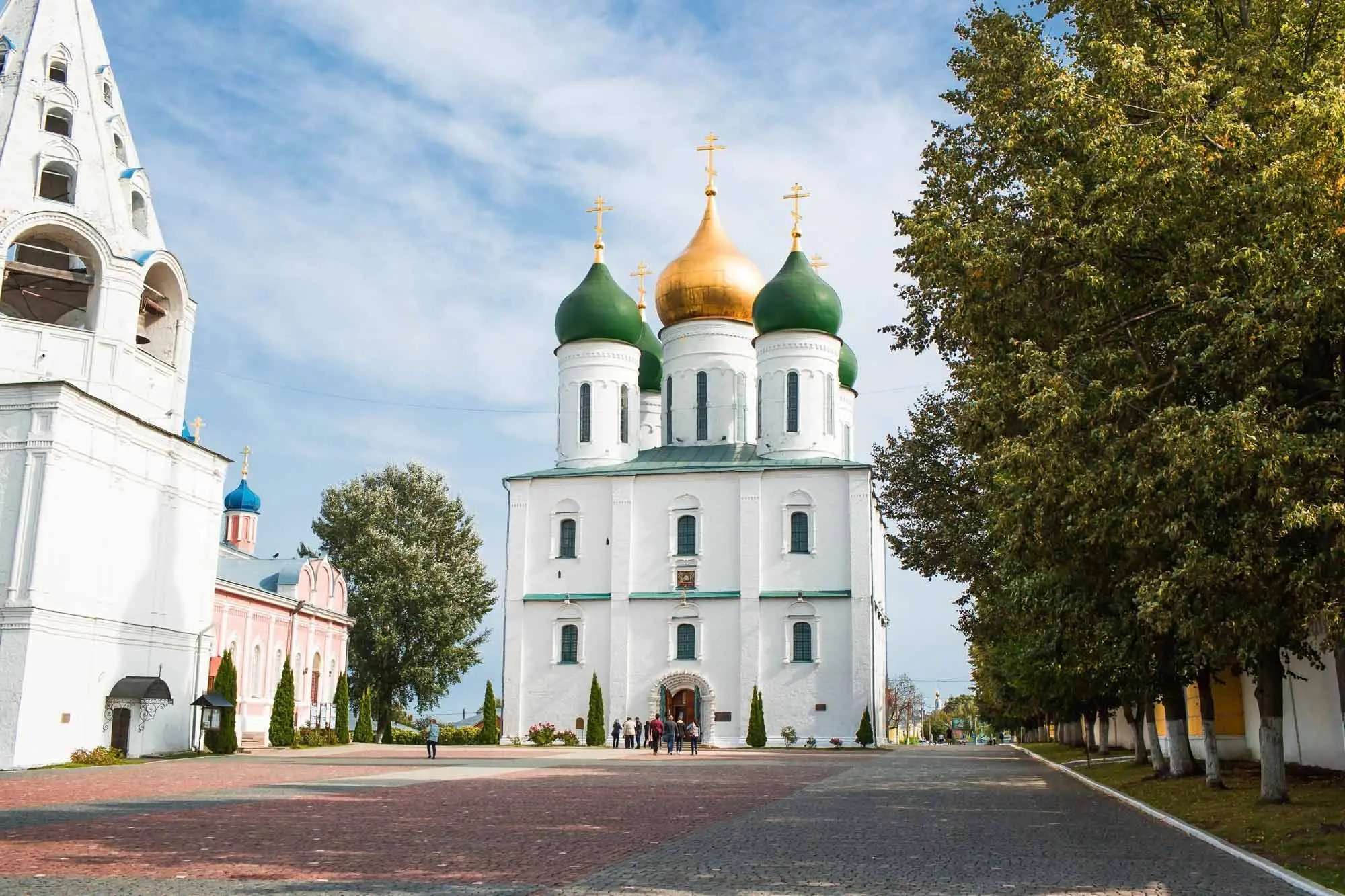
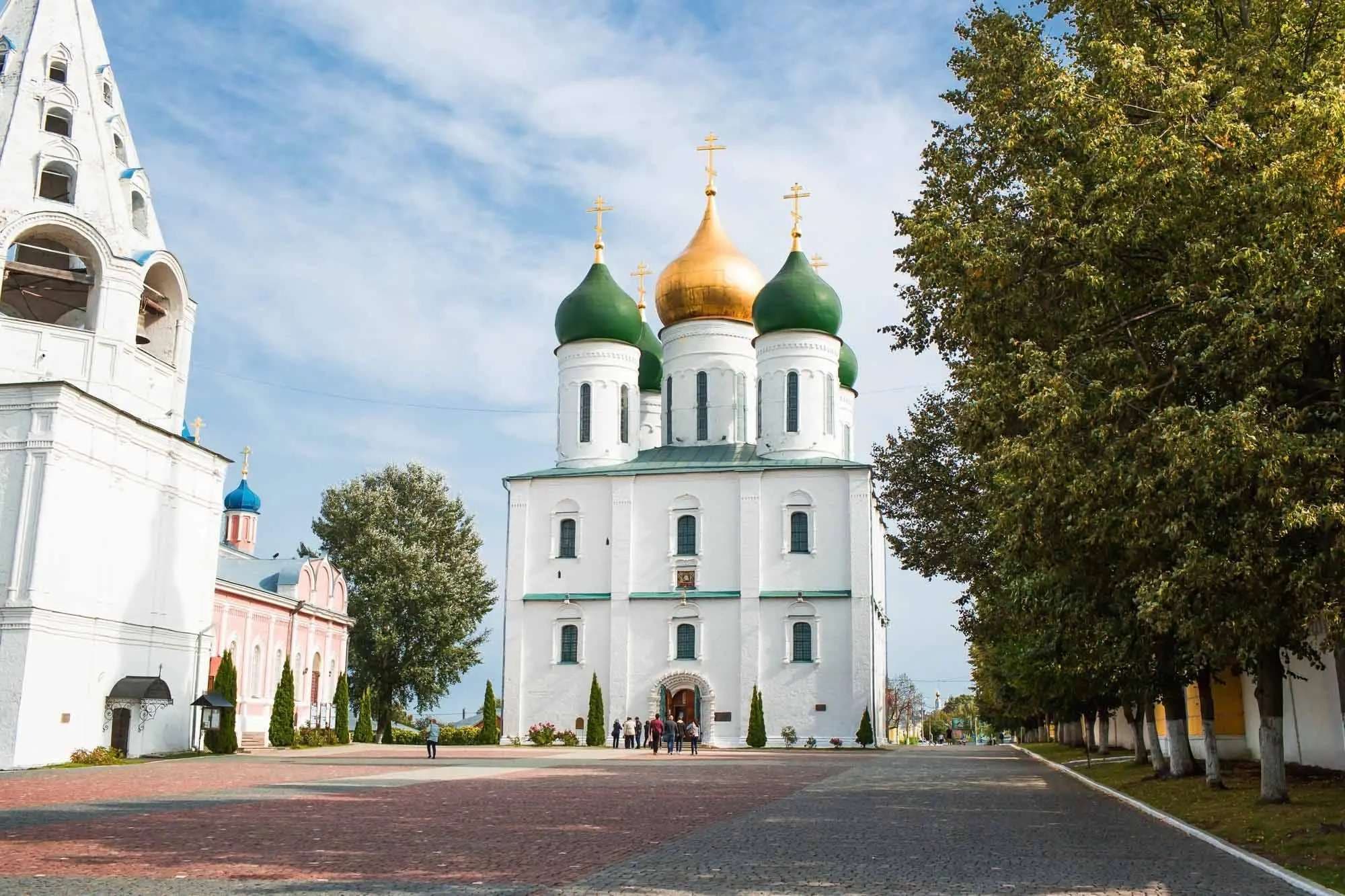
By the mid-17th century the church had fallen into disrepair and was dismantled. In its place, in 1672–1682, a new five-domed, three-apse cathedral was built to a design by the master builder Meletiy Alekseev. White stone from the old building was used for the foundation, while the walls were built of brick. At the same time a tent-roofed bell tower appeared, connected to the neighboring Tikhvin church. Despite the ornate fashion of the era, the new cathedral looks austere: its facades are divided by pilaster strips, and it is crowned with five domes.
Role and Significance
For centuries the church remained Kolomna's spiritual center. Job, the first patriarch of the Russian Church, served here, and Metropolitan Philaret, one of Moscow's outstanding prelates, preached here. The cathedral kept holy relics and rare books, and was adorned with icons in precious covers. The Dormition Cathedral is tied to important events in Russian history, from the Battle of Kulikovo to the age of the 19th-century emperors.
Decline and Revival
In 1929 the cathedral was closed, the tombs of Kolomna's bishops were desecrated, and the interiors were damaged. It was returned to the church only in 1989, and restoration took almost a decade. The white-stone details, murals and iconostasis were restored. In 1999 Patriarch Alexy II reconsecrated the church. Today, with its white walls and golden domes, the cathedral is once again a symbol of spiritual and historic Kolomna, the main church of the diocese and the centerpiece of the kremlin's Cathedral Square.
 9 points
 3 km
 0 hours