←A Walk Around Kolomna

A Walk Around Kolomna

Photo of route “A Walk Around Kolomna”
9 points3 km0 hours

Kolomna is one of the oldest towns in the Moscow region, with a well-preserved kremlin. Here you can soak up the atmosphere of historic Russia, with cobblestones, churches and wooden houses. The town draws visitors with museums on unusual themes and its unhurried pace of life. Kolomna stands at the confluence of three rivers, an hour's drive from Moscow.

Things to do

  • 📜 Learn the city's history
  • 🍲🎶 Local culture
  • 💡🎨 Look for inspiration

Route points (9)

  1. Patefonka — point on route “A Walk Around Kolomna”

    Patefonka

    🕵️ Urban legend · 🎨 Art installations

  2. Silk Factory — point on route “A Walk Around Kolomna”

    Silk Factory

    🎨 Art installations · 📜 Historic site · 🕵️ Urban legend

  3. Pastila Museum Factory — point on route “A Walk Around Kolomna”

    Pastila Museum Factory

    🕵️ Urban legend · 📜 Historic site · 🏛️ Museum

  4. Suranov House — point on route “A Walk Around Kolomna”

    Suranov House

    📜 Historic site

  5. Kalachnaya — point on route “A Walk Around Kolomna”

    Kalachnaya

    🕵️ Urban legend · 🏛️ Museum

  6. Pyatnitsky Gate — point on route “A Walk Around Kolomna”

    Pyatnitsky Gate

    📜 Historic site · 🏯 Fortress remains

  7. Dormition Cathedral — point on route “A Walk Around Kolomna”

    Dormition Cathedral

    🕍 Place of worship · 📜 Historic site

  8. Kolomna Kremlin — point on route “A Walk Around Kolomna”

    Kolomna Kremlin

    📜 Historic site · 🏯 Fortress remains · 🗿 Monument

  9. Artkommunalka — point on route “A Walk Around Kolomna”

    Artkommunalka

    🎨 Art installations · 🏛️ Museum

Kolomna Kremlin in Kolomna

Point on route “A Walk Around Kolomna”

Kolomna Kremlin — point on route “A Walk Around Kolomna”

Point 8

Kolomna Kremlin

📜 Historic site • 🏯 Fortress remains • 🗿 Monument

History of Construction

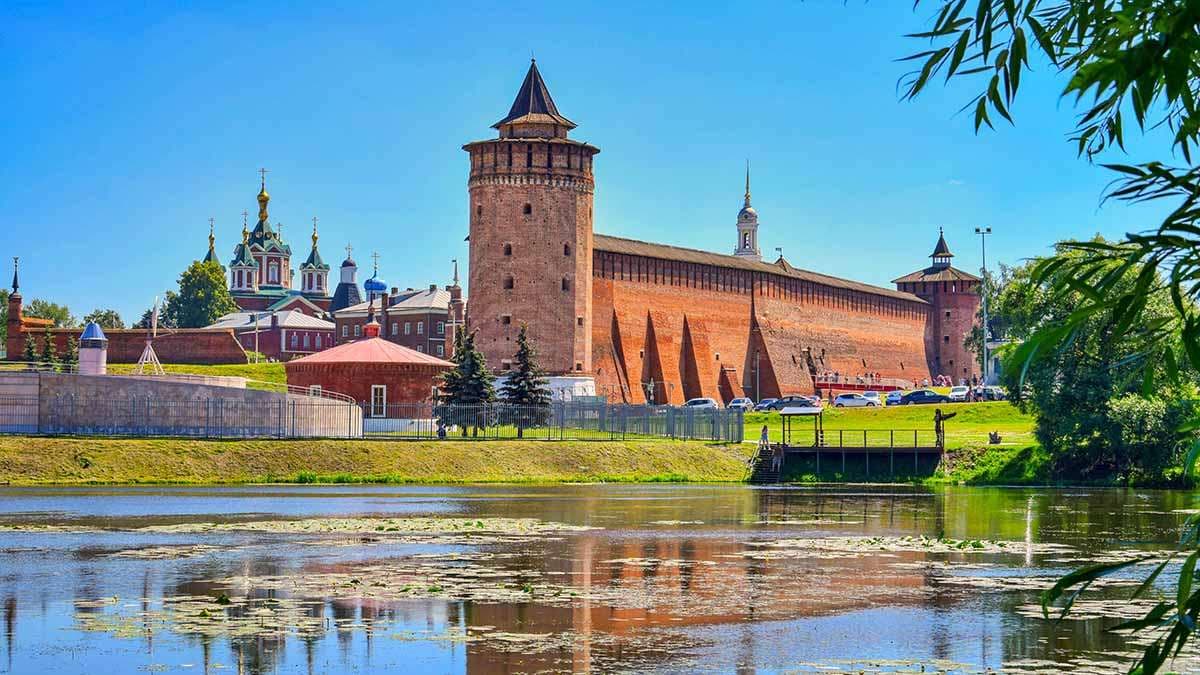
The site of the present kremlin was originally occupied by a wooden fortress built in the early 14th century. It suffered repeatedly from fires and Horde raids. In 1525 Grand Prince Vasily III decided to replace it with a stone citadel. The Moscow Kremlin served as the model, and Italian masters were brought in for the construction, presumably including Aloisio the New. Work went on for six years, and in 1531 Kolomna gained one of the most powerful fortifications in Rus.

Architectural Features

The kremlin covered 24 hectares (59 acres). Its walls ran for almost 2 kilometers (1.2 miles) and stood 18 to 21 meters (59 to 69 feet) high. They were surrounded by a moat, and 16 towers of various shapes were built into them, the tallest rising 35 meters (115 feet). The kremlin was considered impregnable: once it was built, enemies never again managed to take Kolomna by storm.

Military Role

Kolomna stood at the crossroads of trade and military routes and served as the Moscow principality's outpost on its southern frontier. Prince Dmitry Donskoy's troops passed through, and regiments were assembled here for the Battle of Kulikovo. The Time of Troubles didn't spare the fortress either, but foreign invaders and Polish troops got into Kolomna only because of internal strife, not because its walls were weak.

Losses and Preservation

Over time the fortress lost its defensive importance, and in the 18th and early 19th centuries residents began taking its bricks for their own buildings. Only a decree by Nicholas I in 1826 stopped the destruction. Of the 16 towers, seven survive today, and only fragments of the kremlin walls remain.

The Kremlin Today

The Kolomna Kremlin is one of the largest monuments of medieval Russian fortification. It brings together the historic citadel, cathedrals, museums and residential quarters. Here you can see the Pyatnitsky Tower, the main entrance to the kremlin, the Dormition Cathedral and other iconic landmarks. Today the kremlin remains the town's symbol and its main attraction, drawing both tourists and scholars of Russian architecture.