 10 points
 2 km
 2.5 hours




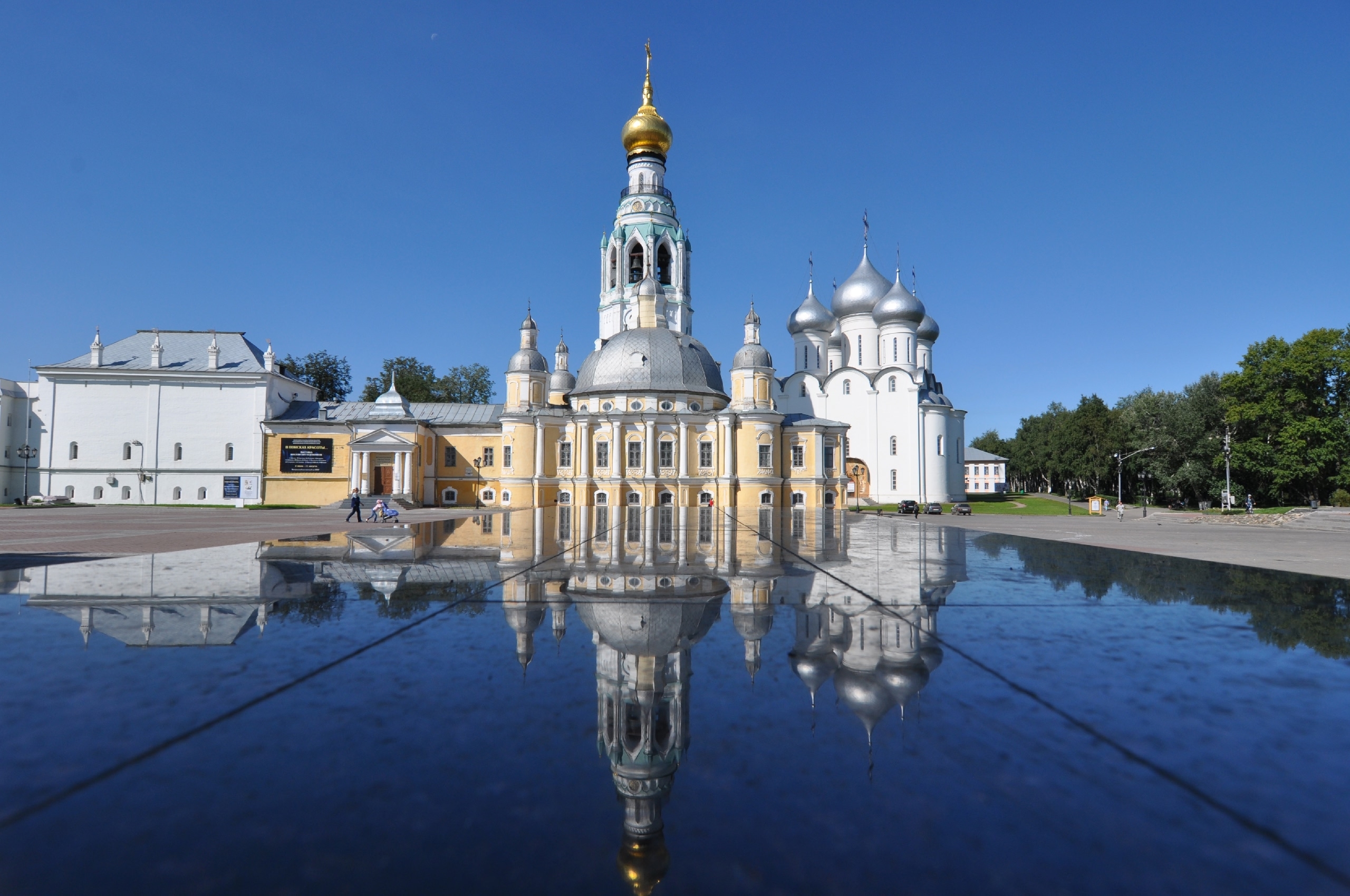

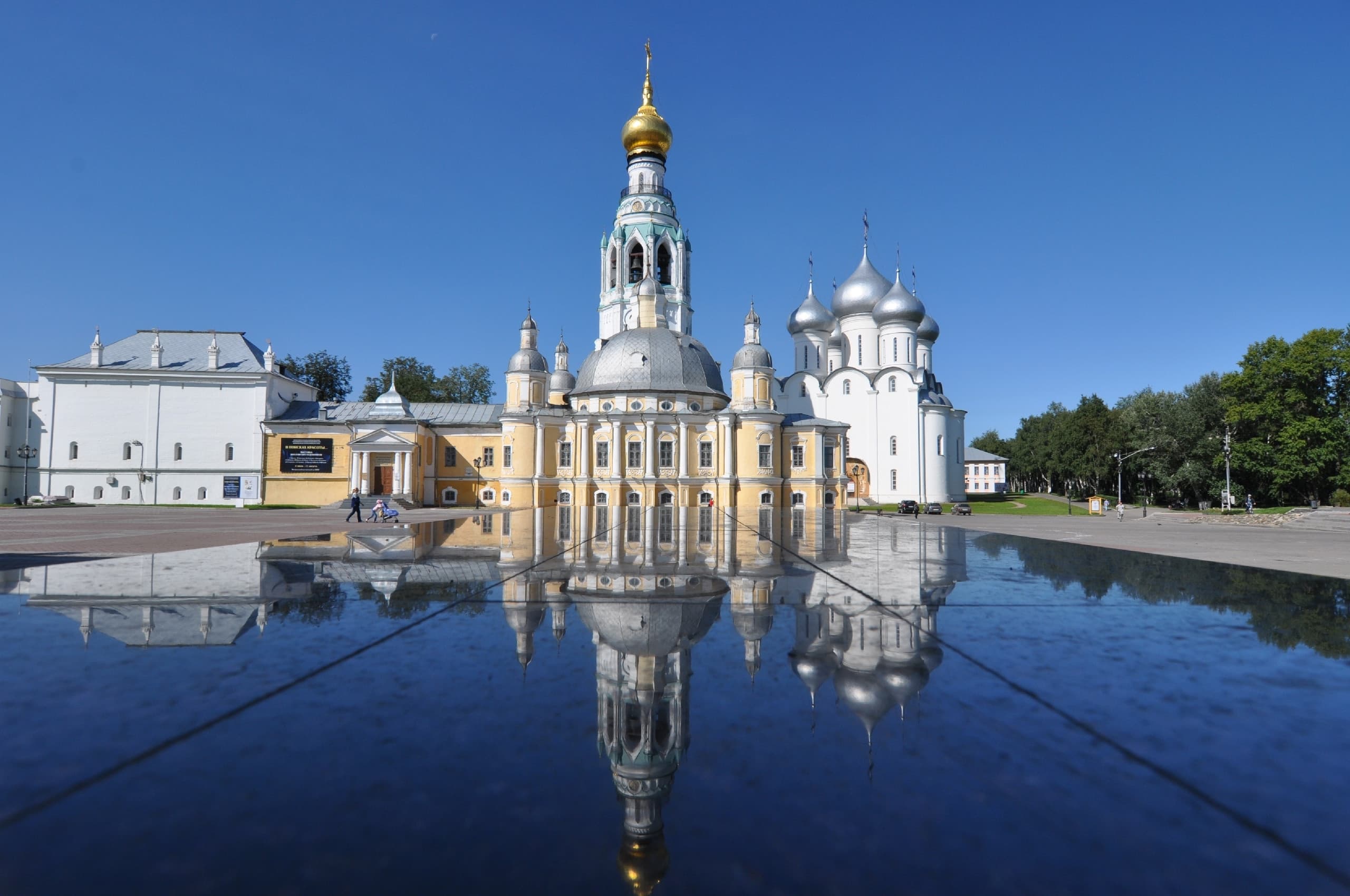
Historical Background
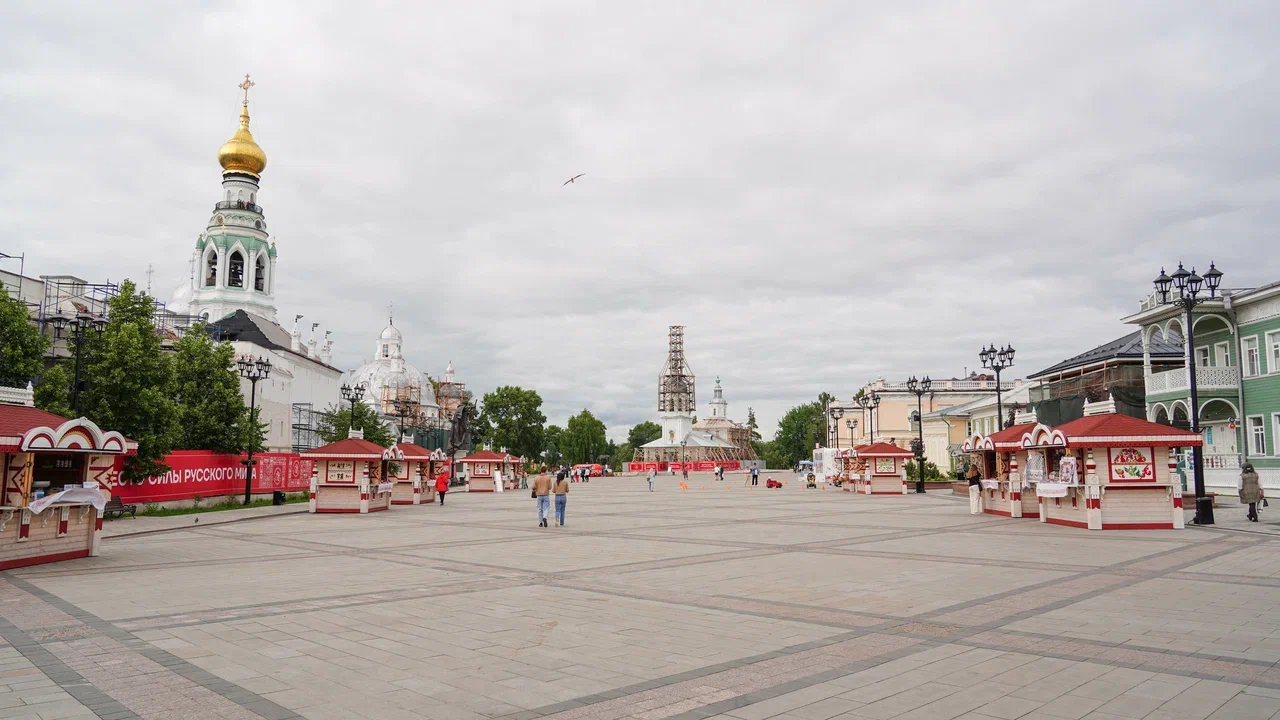
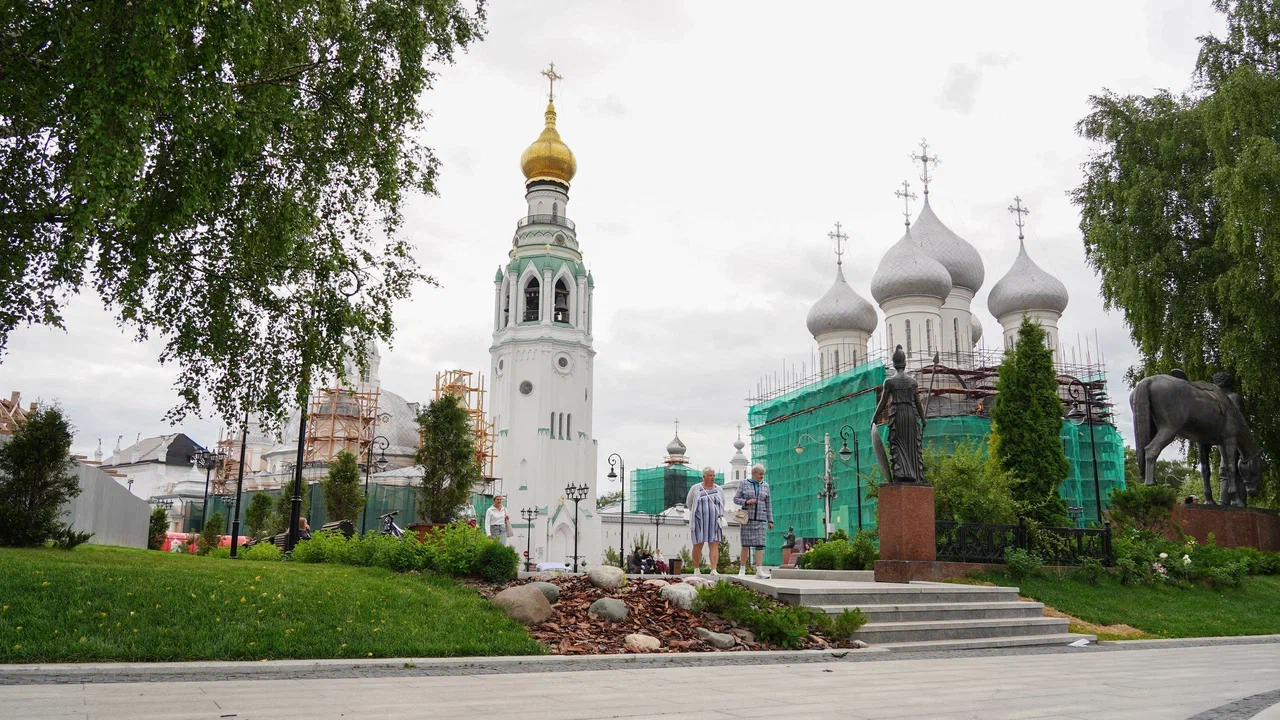
The history of the St. Sophia Cathedral bell tower began at the end of the 16th century with a wooden structure that was destroyed by fire during the Polish-Swedish intervention on September 22, 1612. Over the following decades it was twice rebuilt in wood: the octagonal tent-roofed belfry of the 1620s, described in detail in the 1627 cadastral book, burned in 1636, and the one built in its place in 1642 was dismantled to make way for stone construction. In the mid-17th century (1654–1659) a monumental pillar-like octagon was built using stone left over from Ivan the Terrible's buildings. It was crowned with a stone tent roof and a small dome, and by 1863 the belfry had 14 bells and a tower clock. You can get an idea of what it looked like from the bell tower of the Vladimirskiye Churches, which was modeled on it. In the 1860s the bell tower's appearance changed dramatically: under Bishop Palladius the old tent roof was taken down. On the mighty lower tier, about 17 meters high, the architect V. N. Schildknecht built a new tall landmark in the Gothic Revival style in 1869–1870. It reached 78.5 meters, 32 meters taller than its predecessor. Since then it has been the tallest bell tower in the Vologda Diocese.