Historical Background
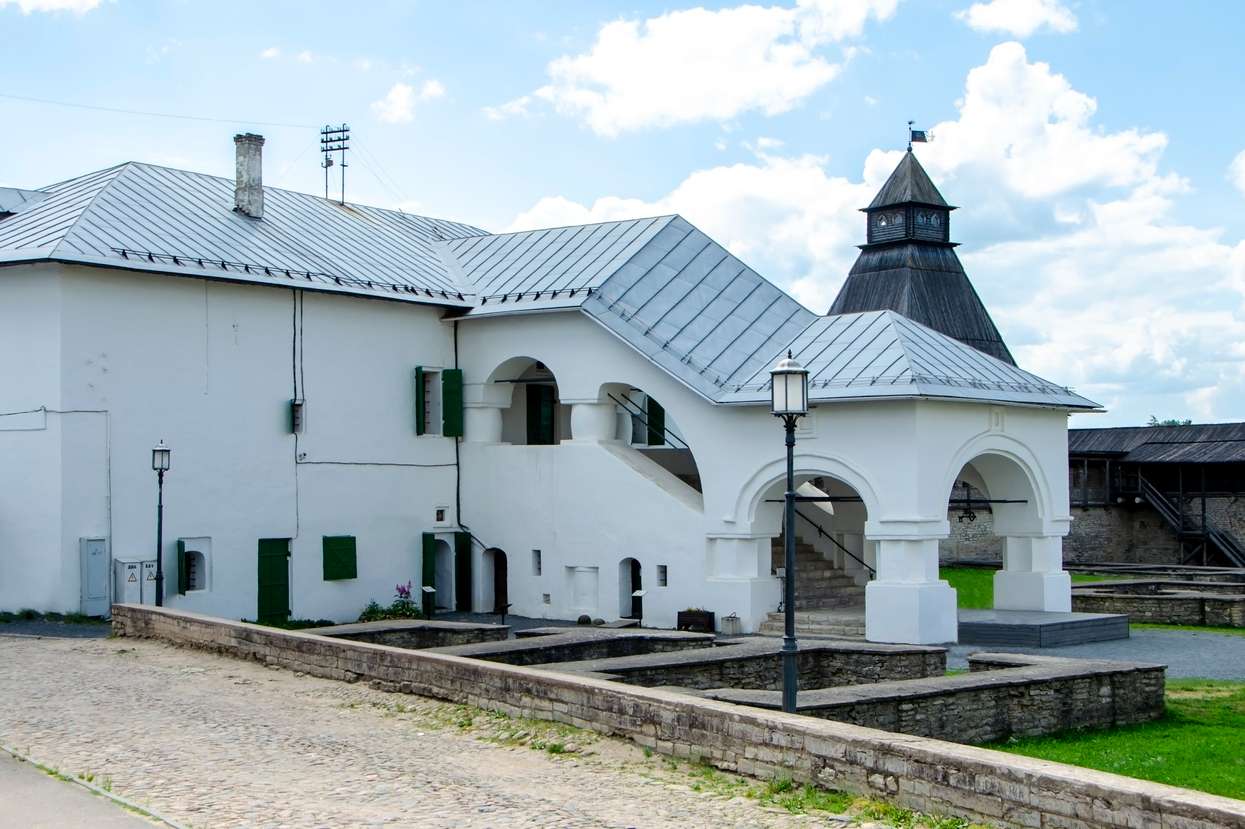
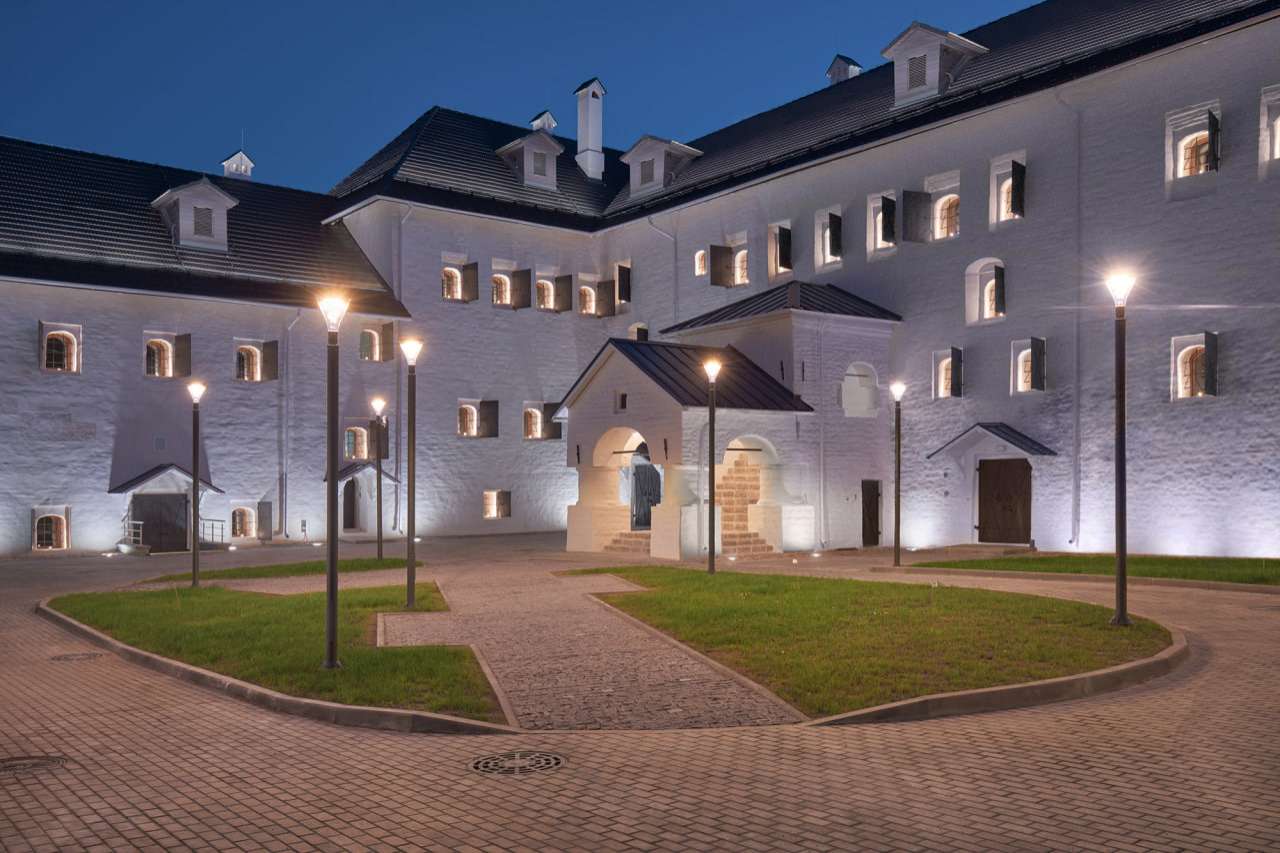
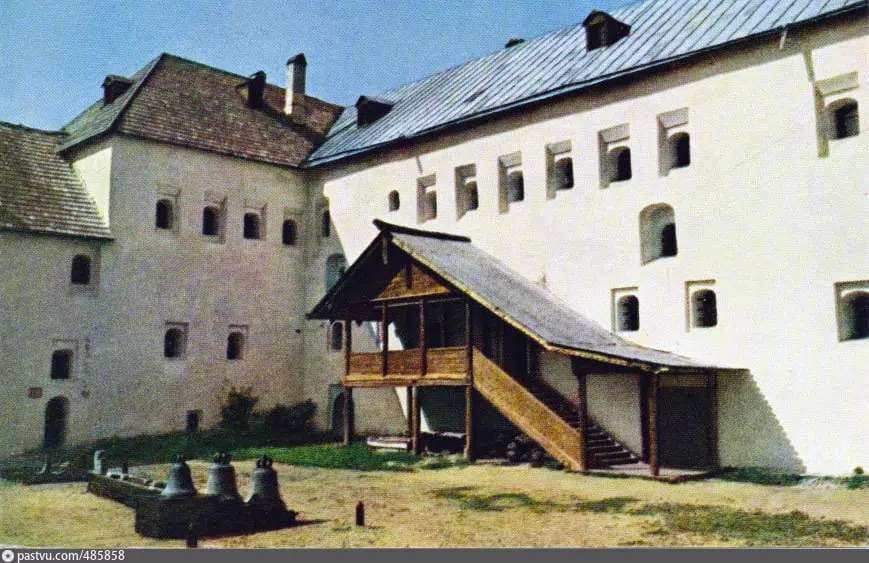
The Pogankin Chambers are the largest 17th-century civic building in Pskov, built for the wealthy merchant Sergei Ivanovich Pogankin. The complex stands in the historic Polonishche district within the Okolny Gorod (Outer Town). The chambers served at once as a residence, a workshop, and a warehouse. In plan the building is shaped like a squared-off U (the Russian letter P) and consists of three sections of different heights, three stories, two stories, and one, built of Pskov limestone.
Architectural Features
The walls were up to two meters (6.5 feet) thick. They were whitewashed and pierced with many small barred windows set at different levels. This asymmetry reflects the complex interior layout, with rooms arranged in an enfilade that gives the building its elongated form. The chambers once had two porches, which have since lost their original look. The building combines features of 17th-century Pskov fortress and church architecture: severe whitewashed facades without decoration.
The Pogankin Family
Sergei Ivanovich Pogankin was an influential merchant and head of several of Pskov's trade and customs institutions. He traded in leather, tallow, flax, salt, and other goods. The family's history is full of legends, including stories about the origin of its surname, linked with wealth and a dubious reputation (pogany means “foul” or “pagan”). The chambers bore the name of this powerful dynasty, which left a notable mark on the life of 17th-century Pskov.
Its Use Today
After the death of the last Pogankin heir in the early 18th century, the chambers passed through various owners and were repeatedly used as warehouses, shops, and government offices. In 1900 the building was given to the Pskov Archaeological Society for a museum, which opened here in 1902. Today the chambers host exhibitions of old coins, silver, icons, and other artifacts, including a hoard found in 2016. Restored, the chambers continue to welcome visitors and remain an important part of the city's cultural life.
 9 points
 0 km
 0 hours