The Beginning: How the Town Came to Be
The first mention dates to 1258, as a Prussian fishing village of a few houses. In 1480 the place got the name Rauschen, after the German baron Albrecht von Rauschen, the owner of these lands, along with its first buildings. Incidentally, the German word rauschen means “to rustle” or “to roar,” which suits a town on a cliff above the Baltic Sea. Only in 1820, on the wave of fashion for therapeutic seaside holidays, was the fishing village of Rauschen turned into a resort. From then on guesthouses, mud baths, cafés, and other facilities were built in Rauschen.
The Tower's History
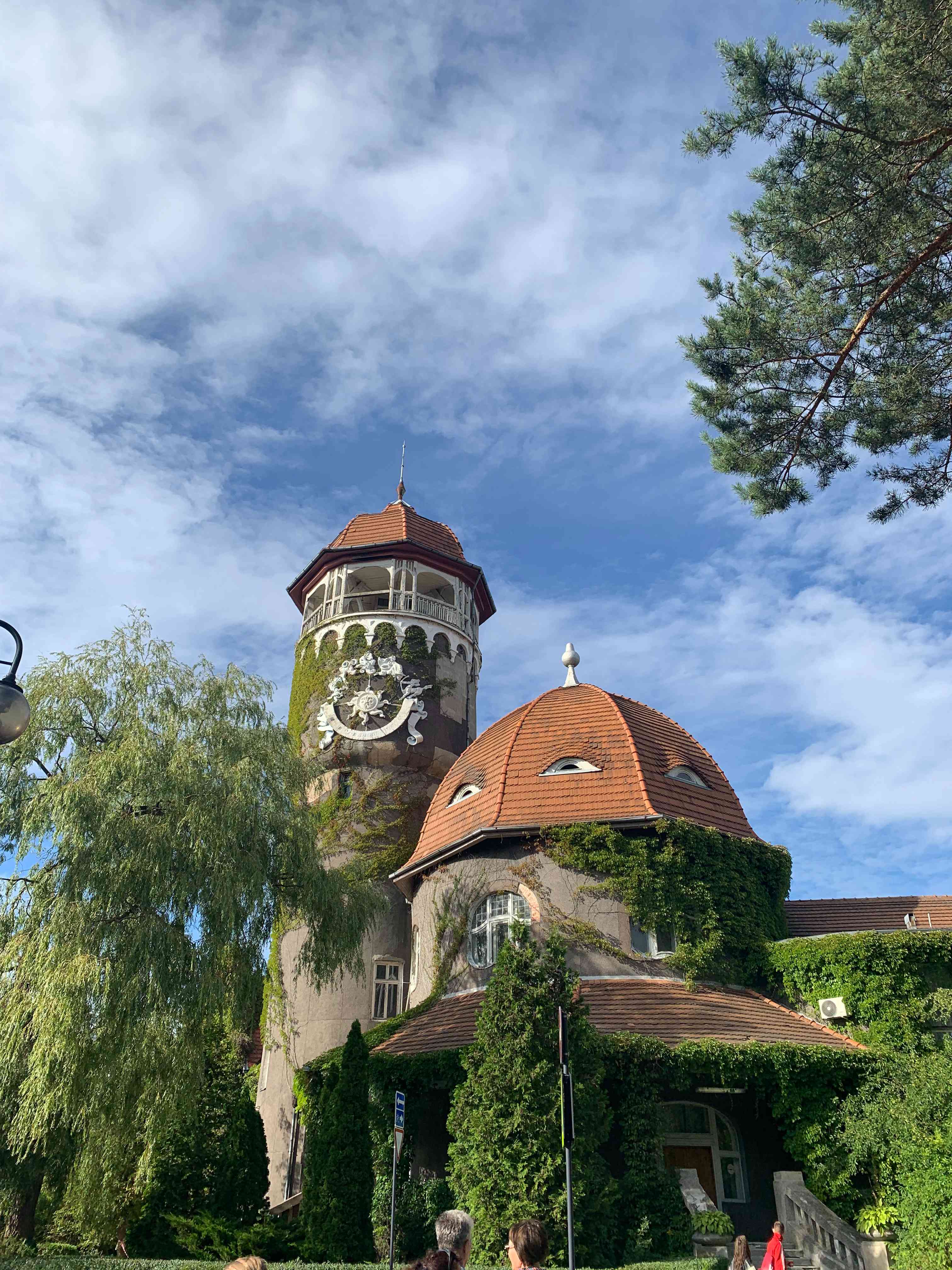
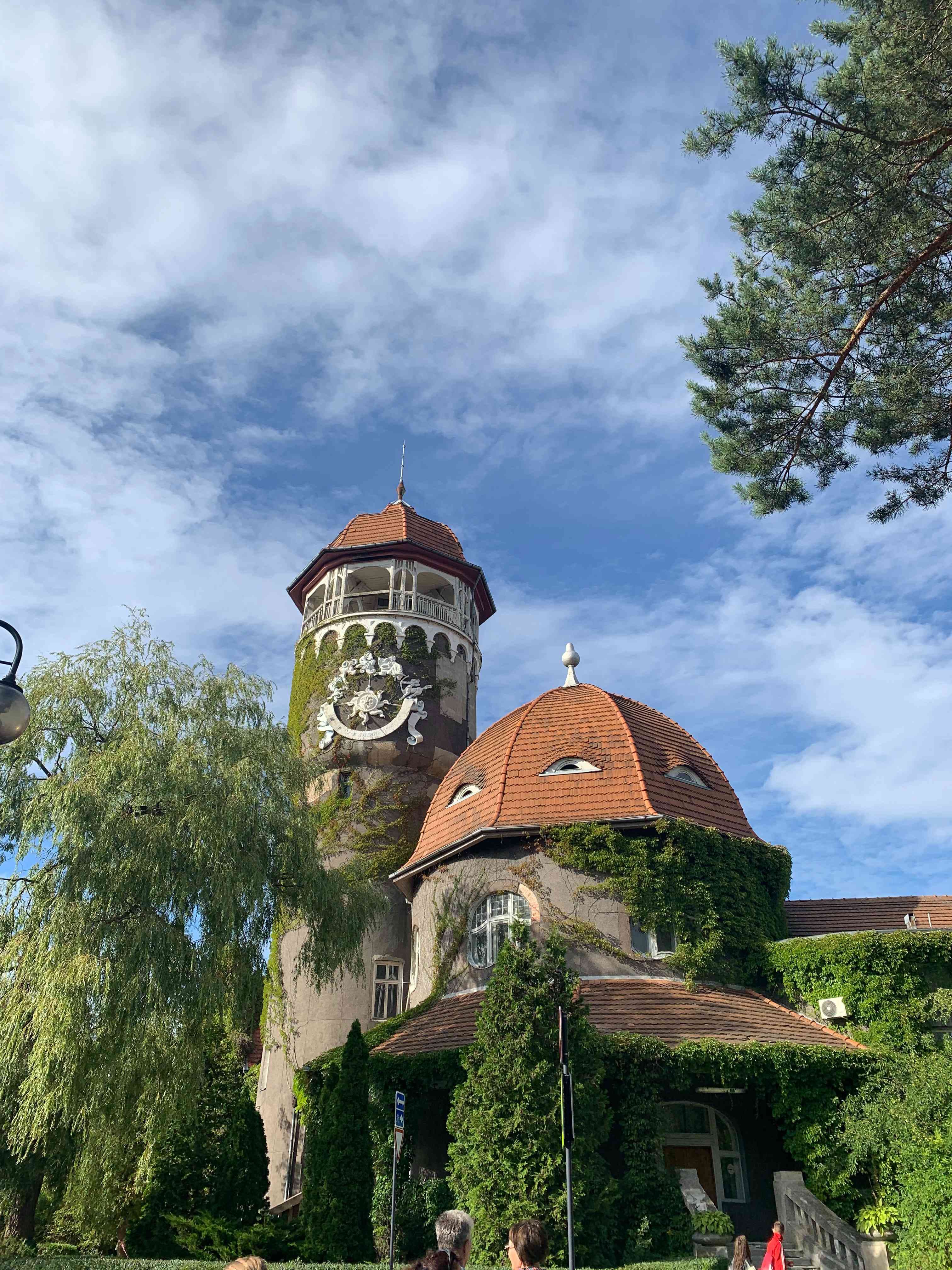
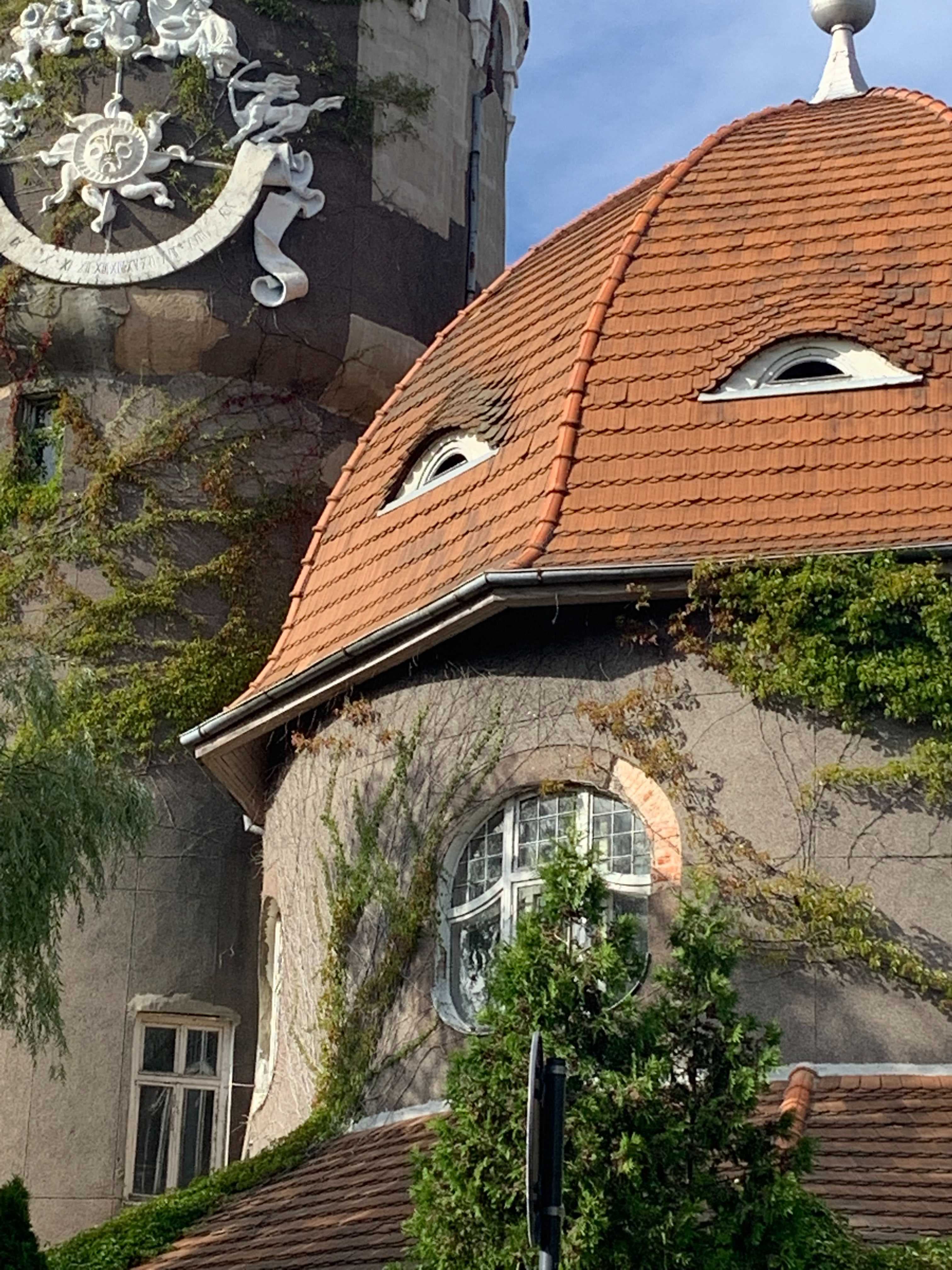
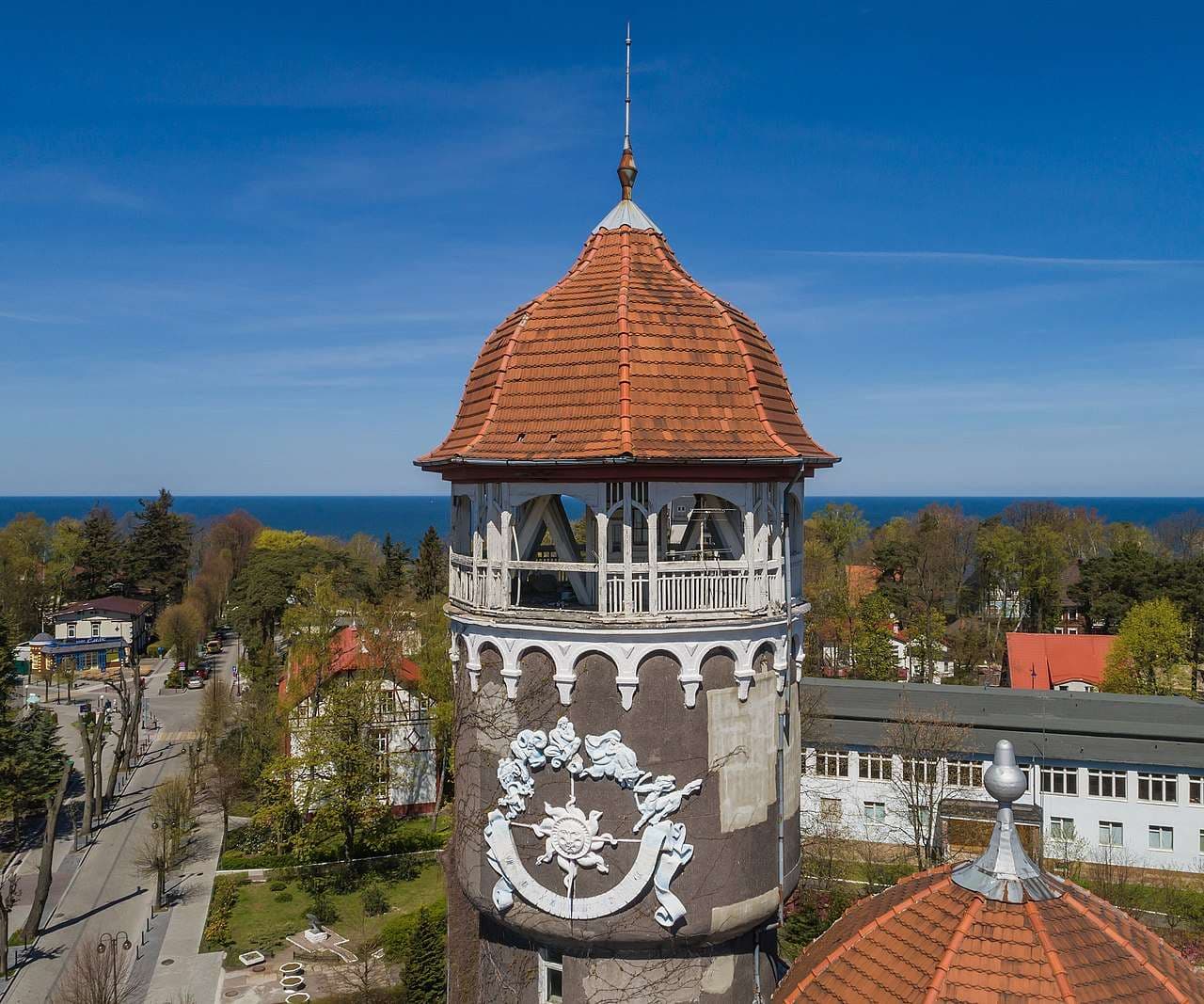
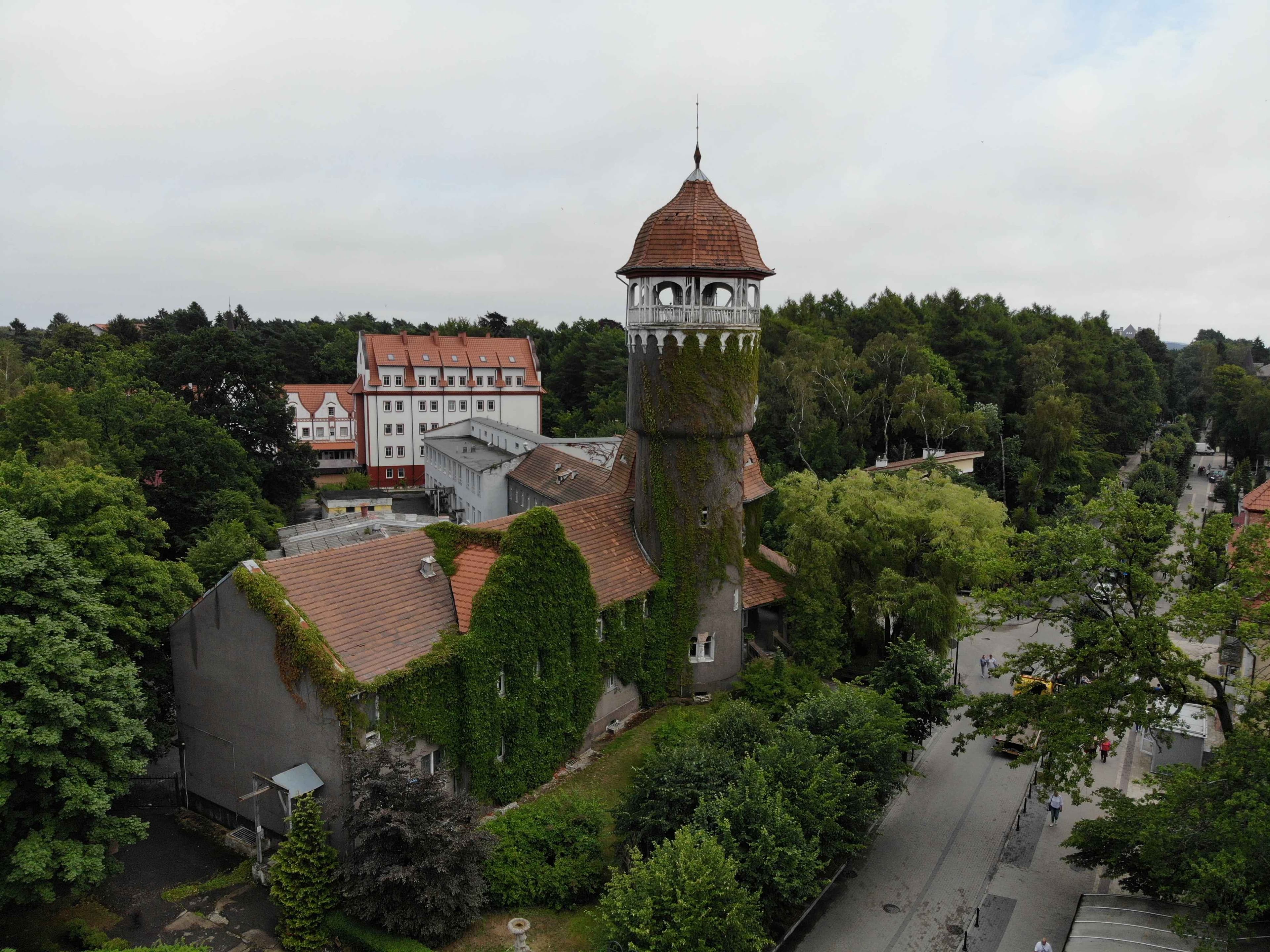
The building of the hydrotherapy and mud-bath clinic with its water tower was built in 1900–1908. The 25-meter (82-foot) tower became the dominant landmark of the entire upper, “dune” part of Rauschen and in effect organized the cathedral square, that is, the town center, around itself. The building is still the town's main symbol.
What It Was For
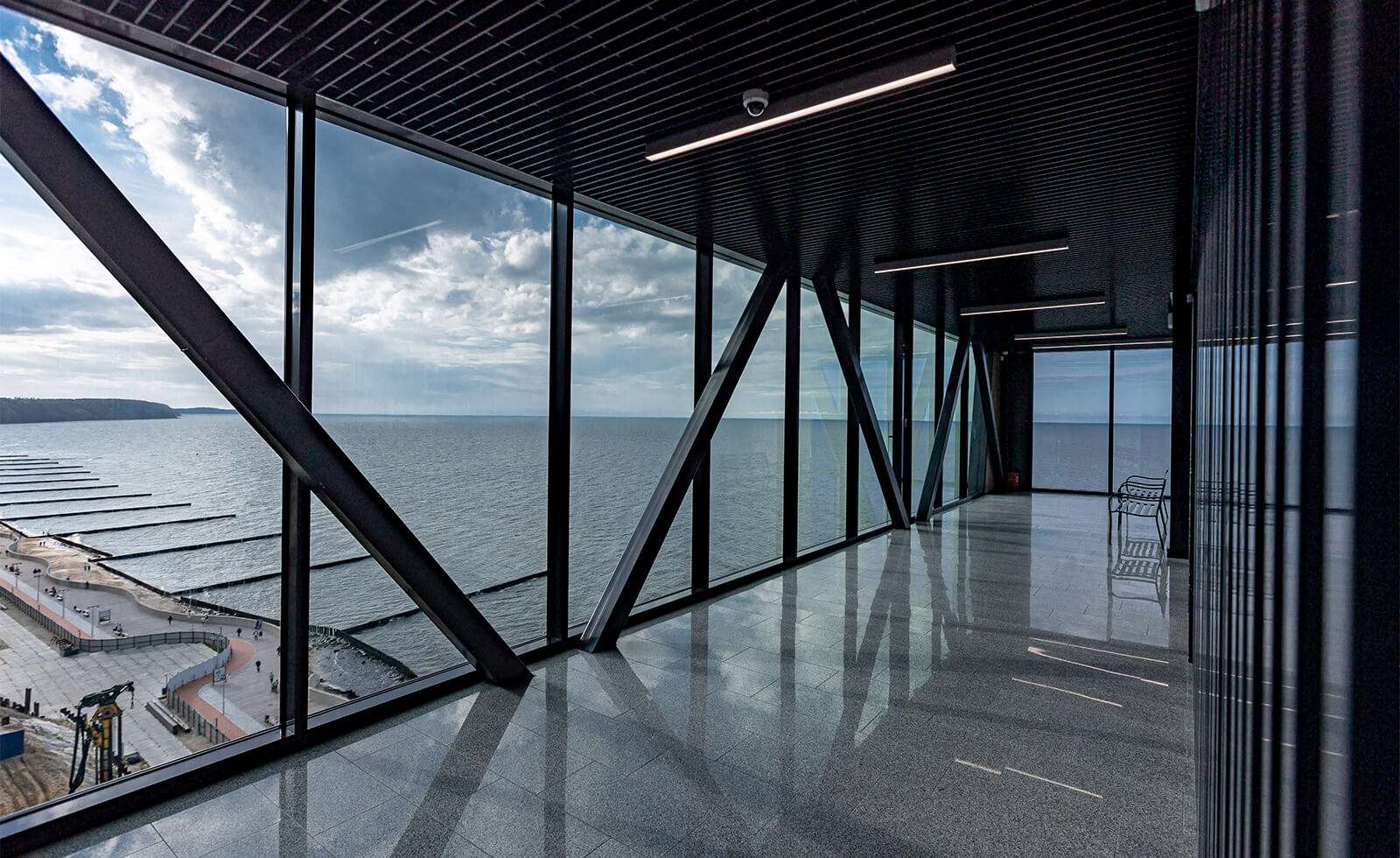
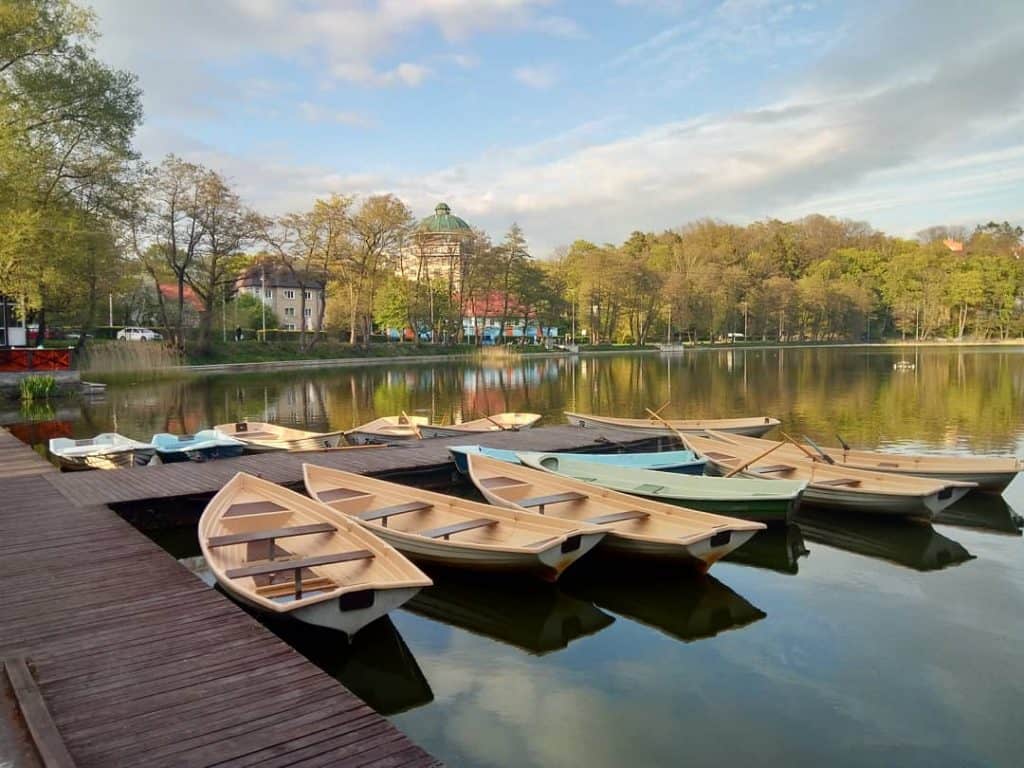
The tower supplied Rauschen with water drawn from springs by the Mill Pond (now Lake Tikhoye). At the top, under the roof, was an observation deck with a view of the sea. The building adjoining the tower housed a mud-bath clinic offering warm seawater and carbonic baths, as well as mud, electric, and light therapy and therapeutic massage. The observation deck is now closed to tourists, and the building serves as one of the wings of a military sanatorium, housing its physiotherapy department.
Details
Notice the clock? It is the work of the Soviet artist N. P. Frolov, who in 1978 linked a new Soviet art object, the mosaic sundial on the promenade, with the town's old symbol, the water tower.
 15 points
 5 km
 2.5 hours