Historical Background
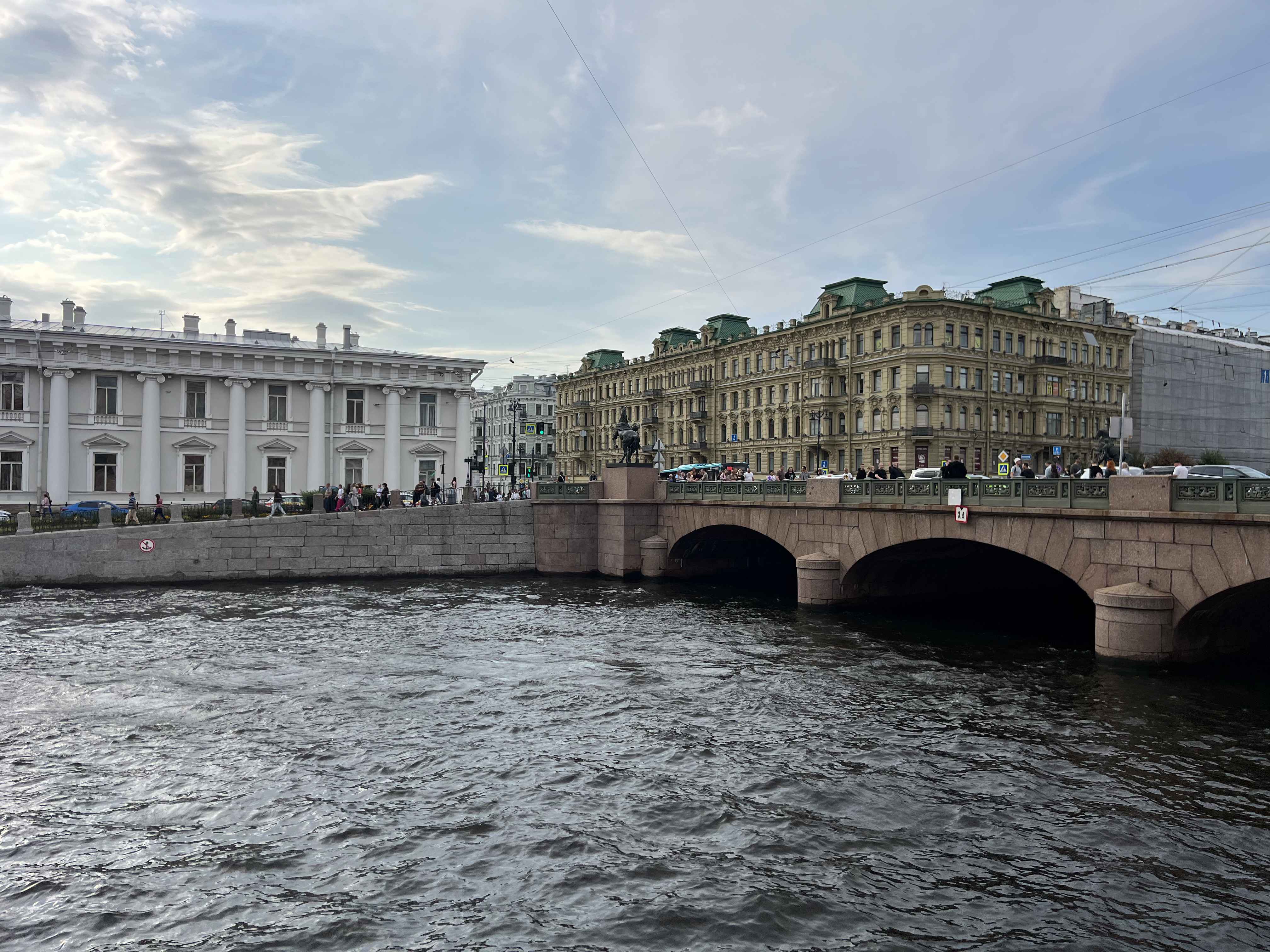
Even in its short history St. Petersburg has changed considerably. The spot where the Anichkov Bridge stands today can safely be called the city center. But until the end of the 18th century it was the very outskirts: at that time the Fontanka River was one of the city's natural boundaries.
The Anichkov Bridge is probably the most famous of St. Petersburg's small bridges. Its name has nothing to do with girls named Anna. It is named after Lieutenant Colonel of Engineers Anichkov, whose battalion built the first bridge here.
Until the end of the 18th century the Fontanka was the city limit, so there was a checkpoint at the bridge.
Versions of the Bridge and Its Sculptures
At first temporary wooden structures were built here; for a time there was even a bridge with towers. The bridge took on its present look in 1842, when the current version was ceremonially opened.
The bridge's most striking and memorable feature is its four equestrian sculptures, “The Taming of the Horse by Man.” The sculptural groups depict four different stages of breaking a horse and were made by Baron Peter Clodt.
In 1841 two sculptural groups were first installed on the western abutments of the Anichkov Bridge. By 1850 the sculptural decoration had become what we know today.
During the Siege of Leningrad the sculptures were taken down from their pedestals and buried in the garden of the Palace of Pioneers. The bridge was badly damaged by German bombing. The sculptures were returned even before Victory Day: by May 1, 1945, the bridge had regained its original appearance.
The Anichkov Palace
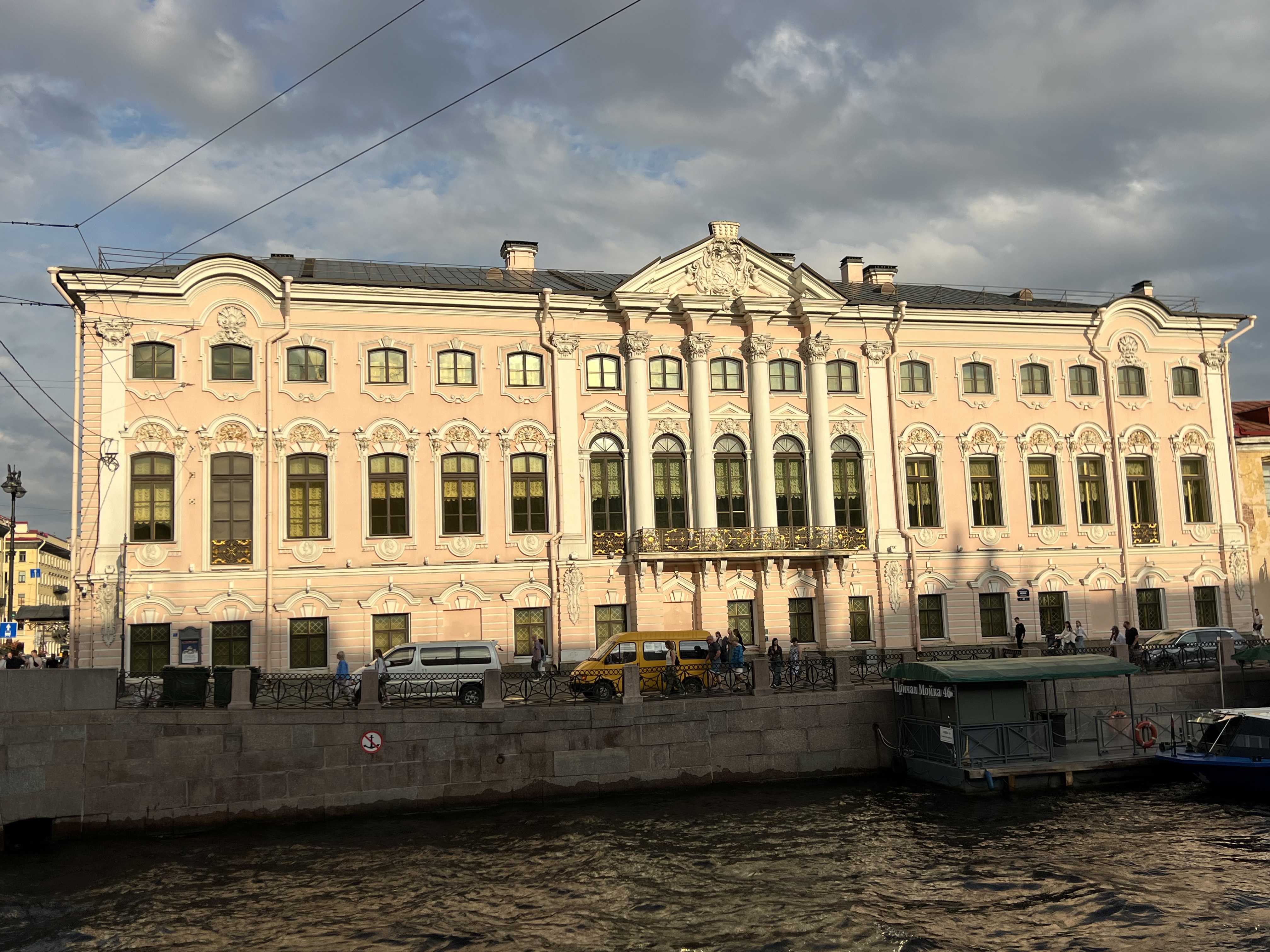
The bridge was built in the first half of the 18th century, when Nevsky Prospekt did not yet play such an important role. That's why the nearby Anichkov Palace, a favorite residence of the Romanovs, stands in such an odd way. Today we are used to the most important and luxurious buildings facing Nevsky Prospekt with their facades as landmarks. But the Anichkov Palace's main facade faces the Fontanka, and today few people realize that this two-story white building once housed the Imperial Cabinet.
In Soviet times it was home to the Palace of Pioneers. Today the buildings house a theater and the Palace of Youth Creativity.
Nearby
Karavannaya Street
Across Nevsky Prospekt from the Anichkov Palace you can see a street with an unusual name, Karavannaya (Caravan) Street, running off into the distance. Cozy and quiet compared with Nevsky, it has pleasant cafés and two well-known cinemas, the Dom Kino and the Rodina. Karavannaya ends at the Circus, and its name is no accident: in the 18th century there was a real caravanserai here. The Persian shah gave the empress an elephant, so a caravanserai appeared in St. Petersburg, and yes, an elephant was led through the city streets.
St. Petersburg Azov Commercial Bank
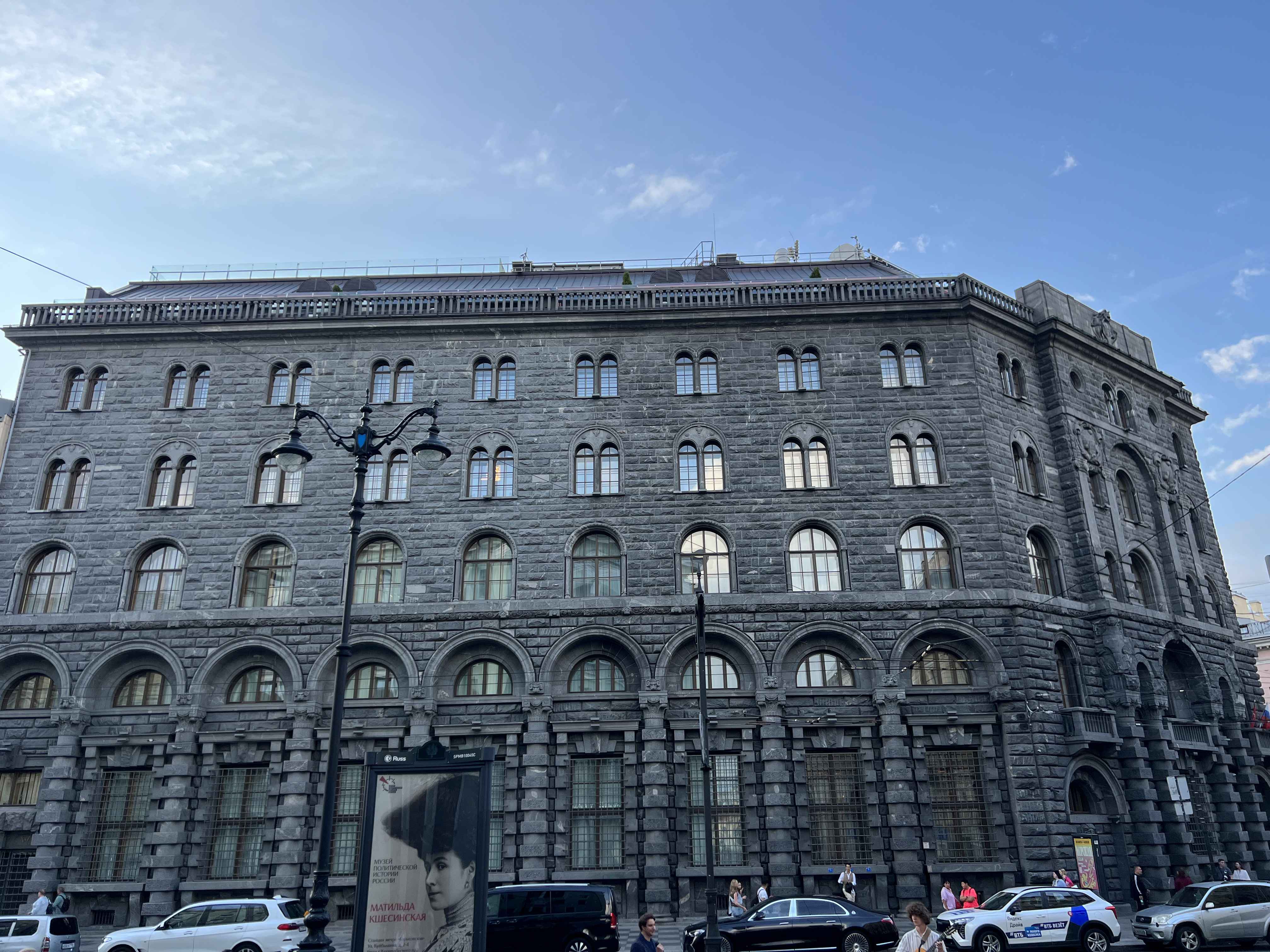
The classical development of St. Petersburg began in the mid-18th century. On the site known to us today as 62 Nevsky Prospekt there were several buildings. A classical three-story house was built there first. In the late 19th century the building was sold to the Azov Commercial Bank, for which the architect Gershovich erected a new building on the site.
Its facade stands out even amid the general architectural diversity of Nevsky Prospekt: to the left and right of the main windows you can see ships' prows, anchors, and the staff of Mercury.
Besides the Azov Commercial Bank, the building housed the board of the Azov Shipping Company, a merchant shipping line in the Sea of Azov basin. In 1901 the Azov Commercial Bank collapsed financially, and the Russo-Asiatic Bank later moved in.
Avrora Cinema
There are several cinemas on and around Nevsky Prospekt, and one of the oldest in all of Russia is in the courtyard of 60 Nevsky Prospekt.
 18 points
 7 km
 1.5 hours