 18 points
 7 km
 1.5 hours



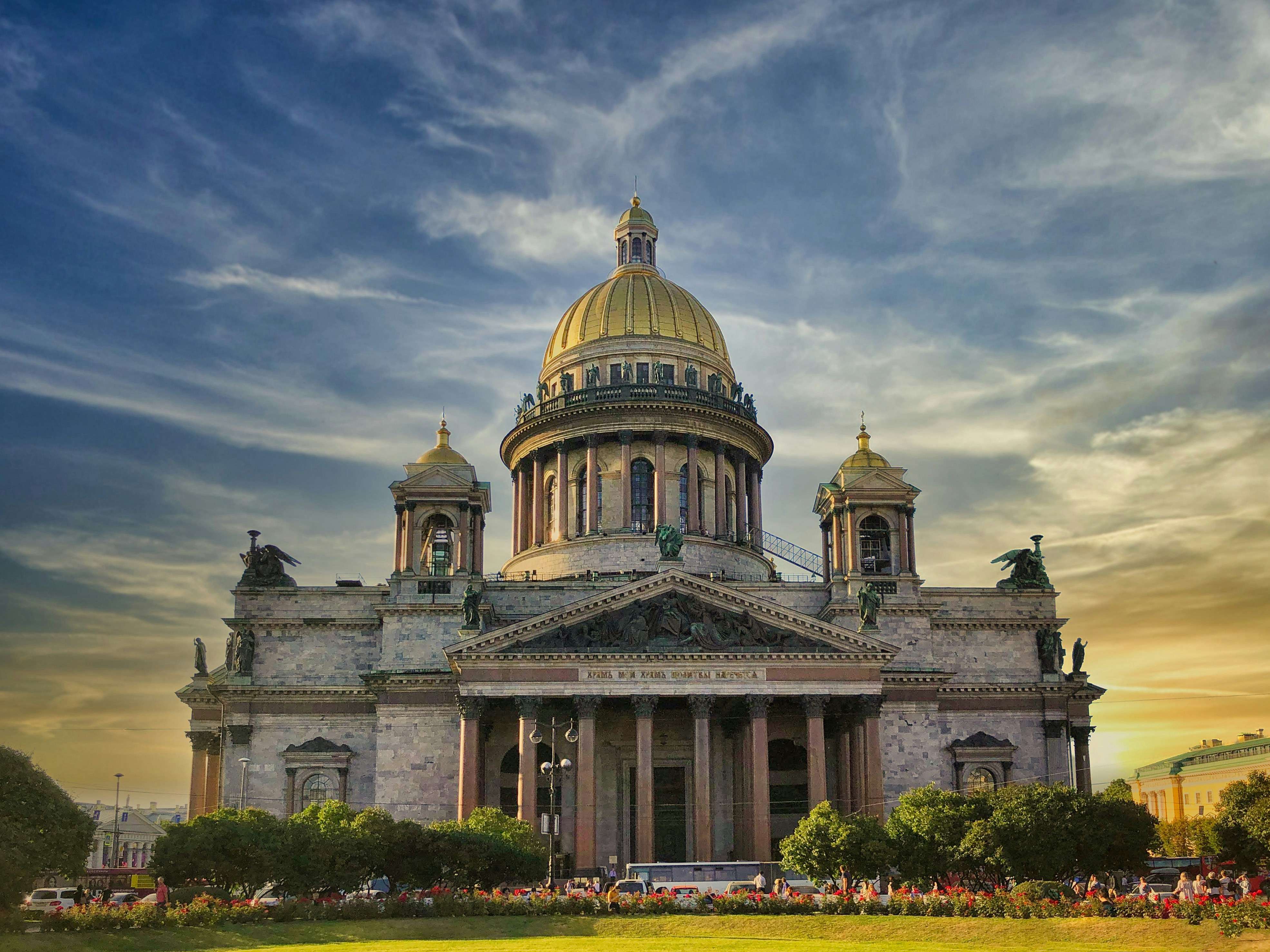


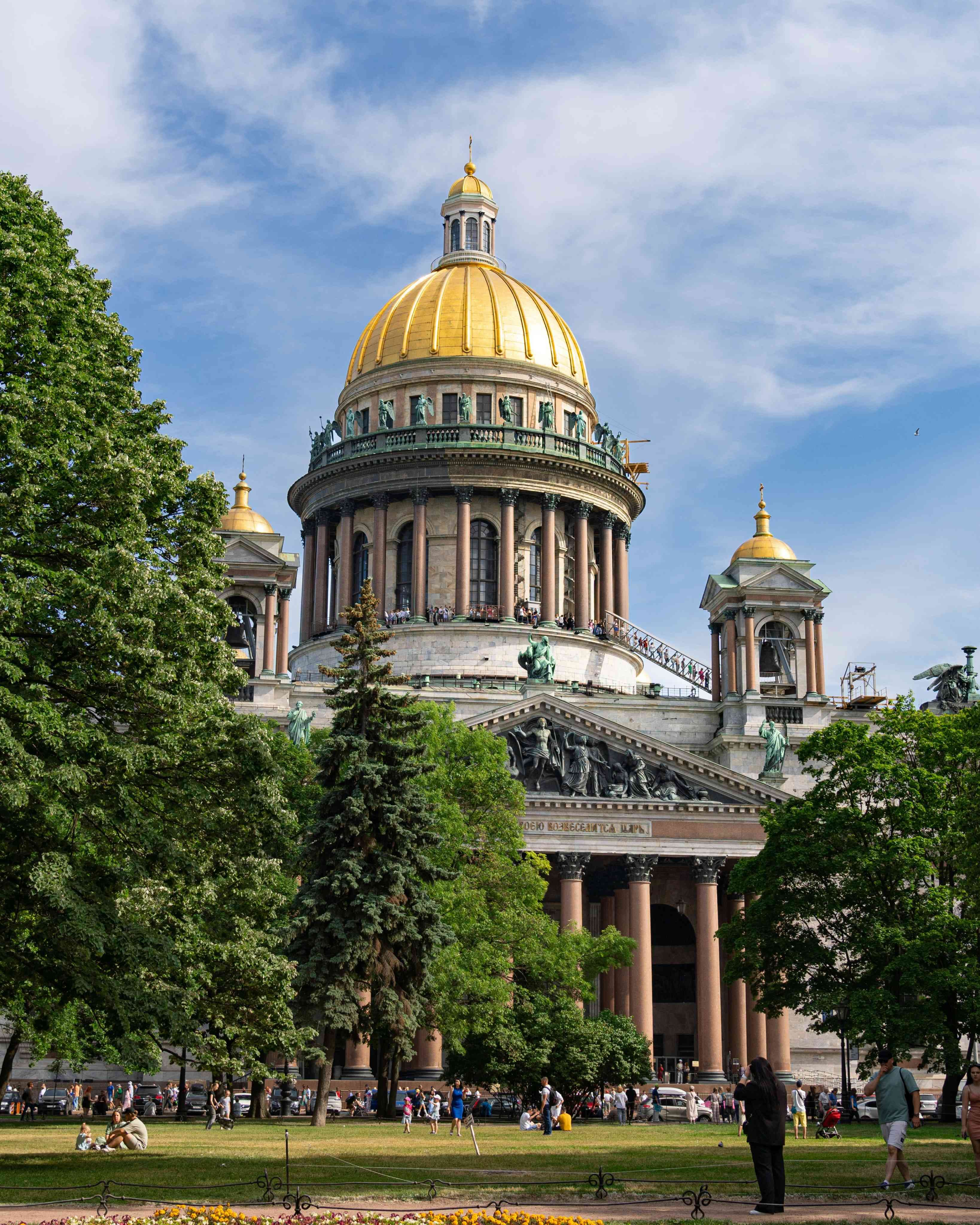

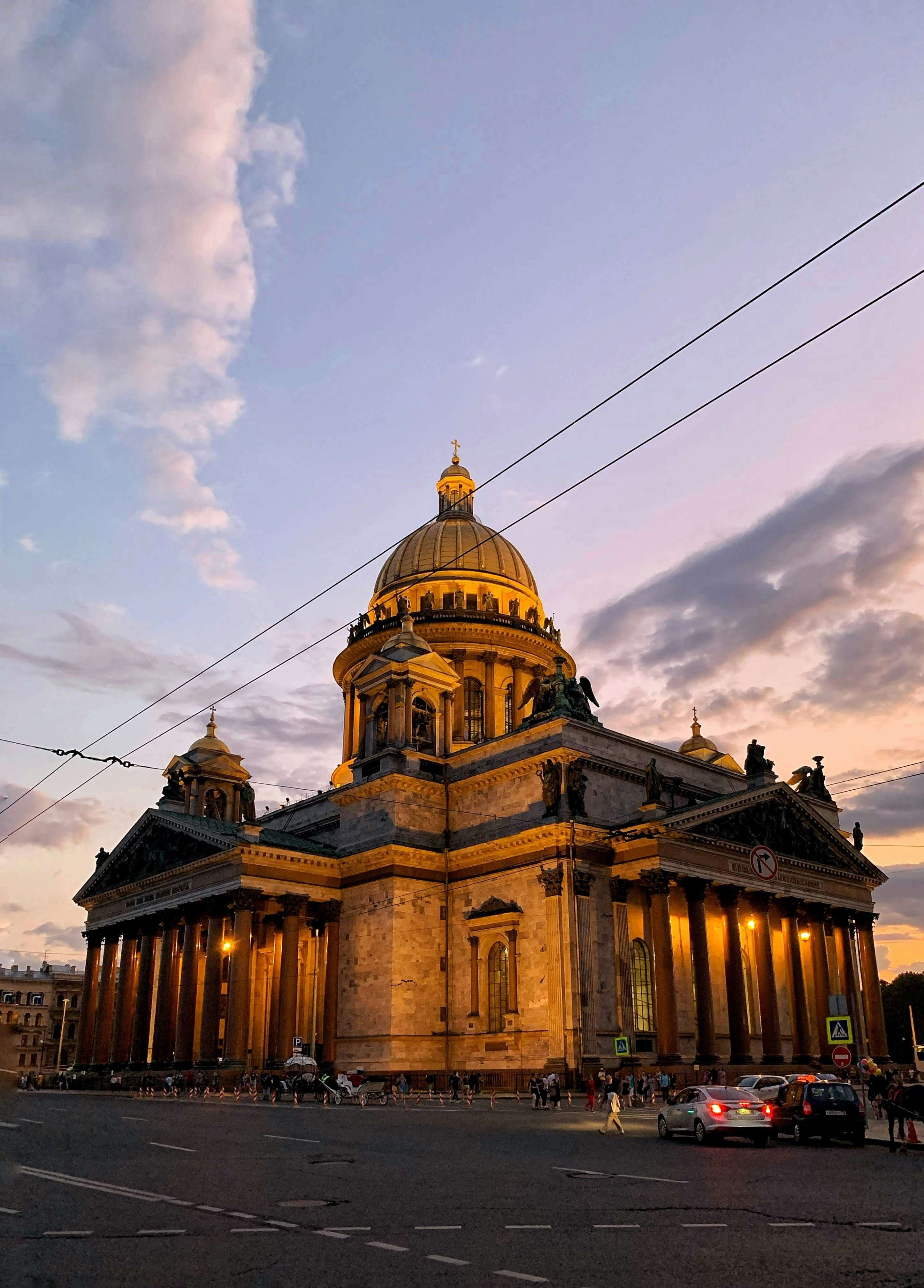
Historical Background
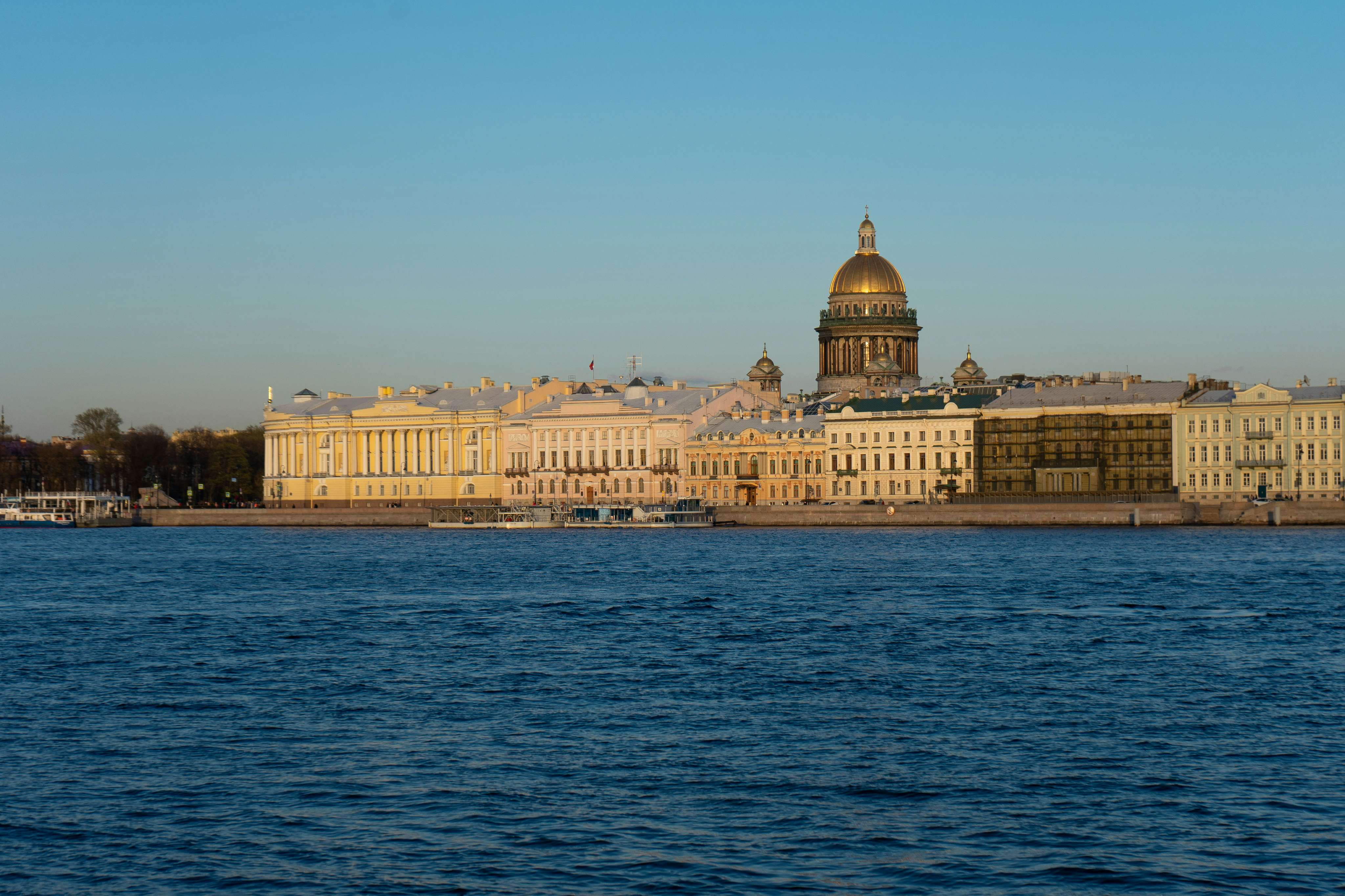
St. Isaac's Cathedral is the largest Orthodox church in St. Petersburg, dedicated to St. Isaac of Dalmatia. It was built from 1818 to 1858. The present building is the fourth cathedral erected on this site. The first church appeared in the 1710s, dedicated to St. Isaac of Dalmatia, whose feast day coincides with Peter I's birthday. This small wooden church soon proved too cramped for the growing city. The second church was built right on the bank of the Neva; it was the first stone building with side porches and an octagonal dome. Its facades were decorated with pilasters and cornices of austere design. In time the church was damaged by fire and gradually lost its strength because of the damp soil. In the 1760s the architect Rinaldi was building the third version of the church. It featured five domes, a tall bell tower, and marble facing. But the work could not be completed: the building remained unfinished after Catherine II's death. At the beginning of the 19th century Alexander I decided to build a new cathedral, a worthy symbol of the capital. An architectural competition was held, and construction was entrusted to Auguste de Montferrand. One condition was to preserve the three consecrated altars of the previous church. Montferrand approached the task creatively: he kept part of Rinaldi's walls, strengthened the foundations, and extended the building along the east–west axis, giving it a cruciform plan. The building is in the Classical and Empire styles, with massive pylons and columns supporting a huge main dome. The architect borrowed the best features of Western European cathedrals but realized them in his own way. The cathedral was built using technologies that were new for the 19th century, which influenced the architecture of centuries to come. To work and transport the huge granite columns, specially designed rail tracks and lifting mechanisms were used for the first time in Russia. The monoliths were brought from quarries on the Finnish coast. On the seashore the columns were given their shape, then shipped by water and delivered to the builders.