←Getting to Know St. Petersburg

Getting to Know St. Petersburg

Photo of route “Getting to Know St. Petersburg”
18 points7 km1.5 hours

In the city on the Neva, luxurious palaces, world-class museums, old cathedrals, and cozy embankments blend in perfect harmony. This route will highlight the city's main sights, along with some of its secrets and legends.

Things to do

  • 📸 Take photos
  • 📜 Learn the city's history
  • 🏰🕵️‍♂️ Discover a legend

Route points (18)

  1. Anichkov Bridge and Palace — point on route “Getting to Know St. Petersburg”

    Anichkov Bridge and Palace

    📜 Historic site · 🏰 Palace · 🌉 Bridge

  2. Ostrovsky Square — point on route “Getting to Know St. Petersburg”

    Ostrovsky Square

    📜 Historic site · 🗿 Monument · ⛲ Square

  3. Eliseev Brothers Trading House — point on route “Getting to Know St. Petersburg”

    Eliseev Brothers Trading House

    🏟️ Architectural landmark · 📜 Historic site · 🕵️ Urban legend

  4. Armenian Church of St. Catherine — point on route “Getting to Know St. Petersburg”

    Armenian Church of St. Catherine

    🕍 Place of worship · 🕵️ Urban legend · 📜 Historic site

  5. Gostiny Dvor (Merchant Arcade) — point on route “Getting to Know St. Petersburg”

    Gostiny Dvor (Merchant Arcade)

    📜 Historic site · 🏟️ Architectural landmark · 🏺 Market / bazaar

  6. Shostakovich Philharmonia — point on route “Getting to Know St. Petersburg”

    Shostakovich Philharmonia

    🕵️ Urban legend · 📜 Historic site · 🎭 Theater

  7. Mikhailovsky Palace (Russian Museum) — point on route “Getting to Know St. Petersburg”

    Mikhailovsky Palace (Russian Museum)

    🏛️ Museum · 🏰 Palace · 📜 Historic site

  8. Singer Company Building — point on route “Getting to Know St. Petersburg”

    Singer Company Building

    🏟️ Architectural landmark · 🕵️ Urban legend · 🔭 Viewpoint

  9. Kazan Cathedral — point on route “Getting to Know St. Petersburg”

    Kazan Cathedral

    🕍 Place of worship · 📜 Historic site · 🏟️ Architectural landmark

  10. Petrikirche (Church of Sts. Peter and Paul) — point on route “Getting to Know St. Petersburg”

    Petrikirche (Church of Sts. Peter and Paul)

    🕍 Place of worship · 🕵️ Urban legend · 📜 Historic site

  11. Stroganov Palace — point on route “Getting to Know St. Petersburg”

    Stroganov Palace

    🏰 Palace · 📜 Historic site · 🏛️ Museum

  12. Wawelberg House — point on route “Getting to Know St. Petersburg”

    Wawelberg House

    🏟️ Architectural landmark · 📜 Historic site · 🕵️ Urban legend

  13. General Staff Arch — point on route “Getting to Know St. Petersburg”

    General Staff Arch

    📜 Historic site · 🏟️ Architectural landmark · 🕵️ Urban legend

  14. Palace Square — point on route “Getting to Know St. Petersburg”

    Palace Square

    ⛲ Square · 🏰 Palace · 📜 Historic site

  15. The Admiralty — point on route “Getting to Know St. Petersburg”

    The Admiralty

    📜 Historic site · 🏟️ Architectural landmark · 🕵️ Urban legend

  16. The Bronze Horseman — point on route “Getting to Know St. Petersburg”

    The Bronze Horseman

    🗿 Monument · 🕵️ Urban legend · 🗿 Sculptures

  17. St. Isaac's Cathedral — point on route “Getting to Know St. Petersburg”

    St. Isaac's Cathedral

    🕍 Place of worship · 🕵️ Urban legend · 📜 Historic site

  18. House at the Red Bridge — point on route “Getting to Know St. Petersburg”

    House at the Red Bridge

    🏟️ Architectural landmark · 🕵️ Urban legend · 🌉 Bridge

Gostiny Dvor (Merchant Arcade) in Saint Petersburg

Point on route “Getting to Know St. Petersburg”

Gostiny Dvor (Merchant Arcade) — point on route “Getting to Know St. Petersburg”

Point 5

Gostiny Dvor (Merchant Arcade)

📜 Historic site • 🏟️ Architectural landmark • 🏺 Market / bazaar

Historical Background

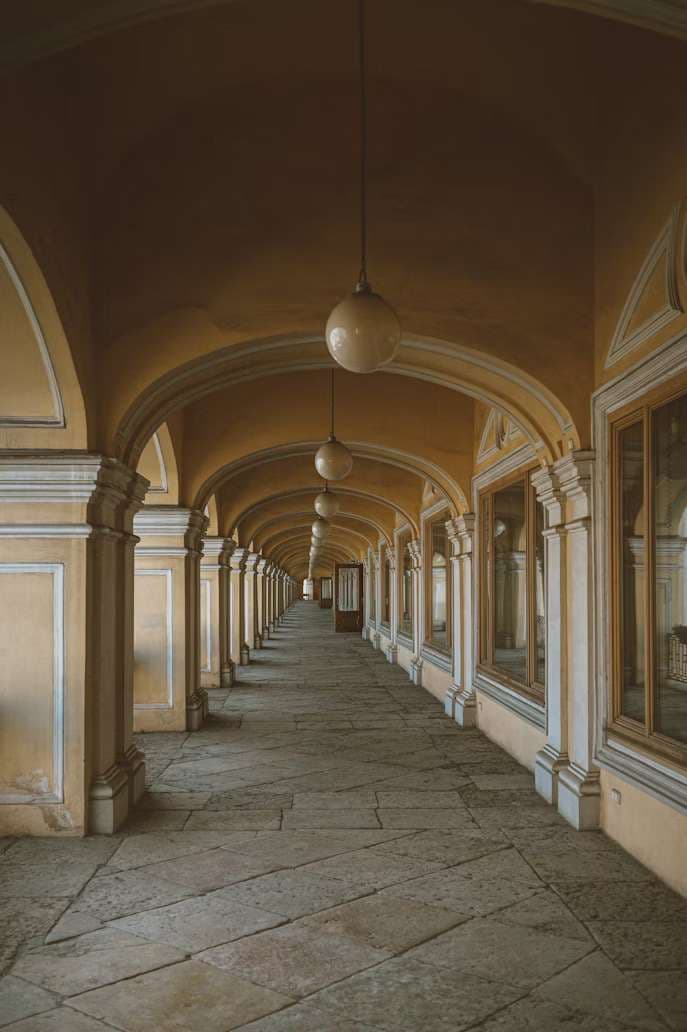
This historic landmark stands in the very center of St. Petersburg. It was built in 1785, although construction had begun 24 years earlier. Trading places were built in St. Petersburg almost from the city's founding. For example, one of the city's first Gostiny Dvors (merchant yards) was built by order of Peter I on Trinity Square, where the Cathedral Mosque now stands. In 1738 the Customs Yard by the Green Bridge burned down. It was decided not to restore the old structure but to build a new Gostiny Dvor closer to the city limit. As we've already learned, in those days the city boundary ran along today's Fontanka, and Gostiny Dvor is only a short distance away, which was convenient for trade. The history of Gostiny Dvor on Nevsky begins with Empress Elizabeth's decree of 1748 on erecting a one-story building with galleries over cellars. The project was planned on a grand scale from the start, as the largest commercial building in the Russian Empire.

A Drawn-Out Construction

The first design for Gostiny Dvor was made by the famous architect Antonio Rinaldi in 1750. But instead of construction starting, there were endless disputes over financing: should the merchants or the treasury pay? In 1757 Rastrelli's design was approved, to be financed by the merchants for their own benefit. Construction began that same year, and the foundations were laid. The design called for the building to be richly decorated with stucco and sculptures, resembling city palaces. But the merchants dragged their feet on funding and doubted that such luxurious trading rows would ever pay off. Thus a third design appeared, by Vallin de la Mothe (yes, that's one person). The new design kept Rastrelli's layout but greatly simplified the architectural decoration. And so Gostiny Dvor was given the early Classical style that was then coming into fashion. Construction went on from 1761 to 1785. In the 1840s Gostiny Dvor became one of the first buildings to get gas lighting. In 1886–1887 the main facade facing Nevsky Prospekt was renovated and decorated to a design by Benois.

Today

Today Gostiny Dvor doesn't make an especially overwhelming impression next to the other architectural gems of Nevsky Prospekt. But for its time it was a landmark building, one of the main centers of trade in the empire. Today it is an ordinary shopping venue, and the square in front of the main facade often hosts events: themed exhibitions, the city Christmas tree, and so on.

Nearby

The City Duma Building with Its Tower This building with a tower has served different purposes over the years. Originally it was the city hall, the body that governed the merchants and the city's trade. Later it housed the St. Petersburg City Duma. The building and tower were rebuilt several times. The Duma Tower was originally a functional structure: it served as a fire signal tower. In 1835 a device for hoisting signal balls was installed; the balls indicated the location and scale of a fire. The original design proved unsuccessful and was soon rebuilt. Today it is another wonderful observation deck on Nevsky. You can climb up and admire the city's main artery.

St. Catherine's Basilica

This Catholic church was built in the 18th century. The building is in a style transitional from Baroque to early Classicism and has the shape of a Latin cross crowned with a dome. Next to the church you can always find artists with their works. The church itself only underscores that St. Petersburg and Nevsky Prospekt are a place of many cultures and religions.