History of the Site
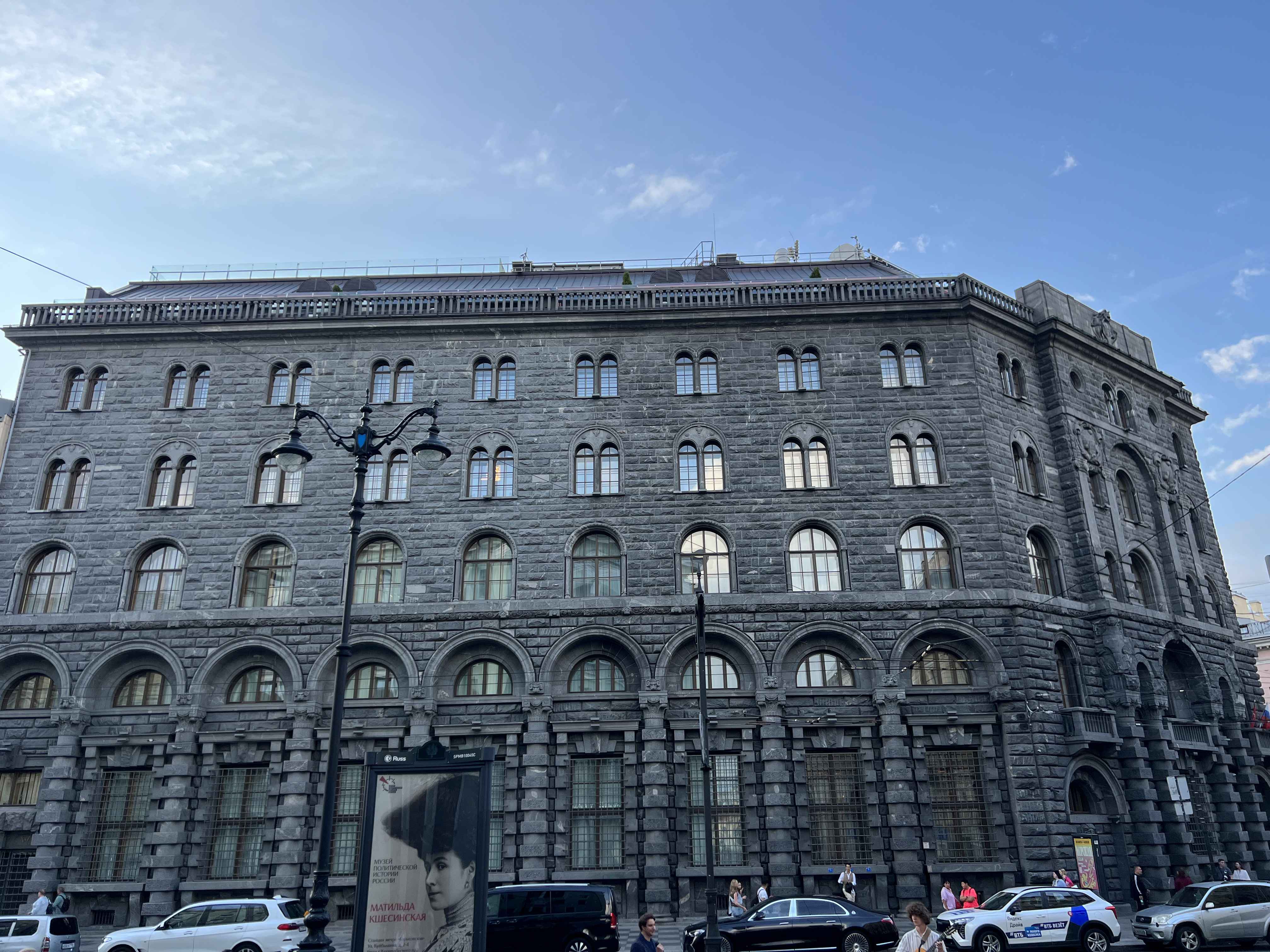
Today, on the corner of Nevsky Prospekt and Malaya Morskaya Street, you can see a luxurious mansion faced with dark stone. It houses the Wawelberg Hotel, named after a family of bankers. Yet at different times other buildings stood on this spot.
The plots now occupied by the hotel remained undeveloped until the early 19th century. Then, in 1802–1803, two four-story stone buildings were built here for the artist brothers Bernikov. Later these houses changed owners and were rebuilt from time to time. For example, in 1871 a “flower gallery” was set up on the roof of one of the two houses. The ground floors of both houses held all sorts of establishments: a bookshop and a shoe store, a fruit stall, a bakery, a tavern, and so on.
In the mid-19th century the St. Petersburg Commercial Bank was founded in Warsaw. Its founder was Heinrich Wawelberg, a merchant of the first guild, and his descendants carried on the banking business. In 1901 the question arose of building a new bank building in St. Petersburg. The spatial core of such buildings was the banking halls, which needed large floor areas. So the choice fell on the two buildings on the corner of Nevsky Prospekt. The banker Mikhail Wawelberg, the founder's grandson, bought both plots, and construction soon began.
In 1911–1912 the famous St. Petersburg Commercial Bank was built in the capital of the Russian Empire.
Architecture
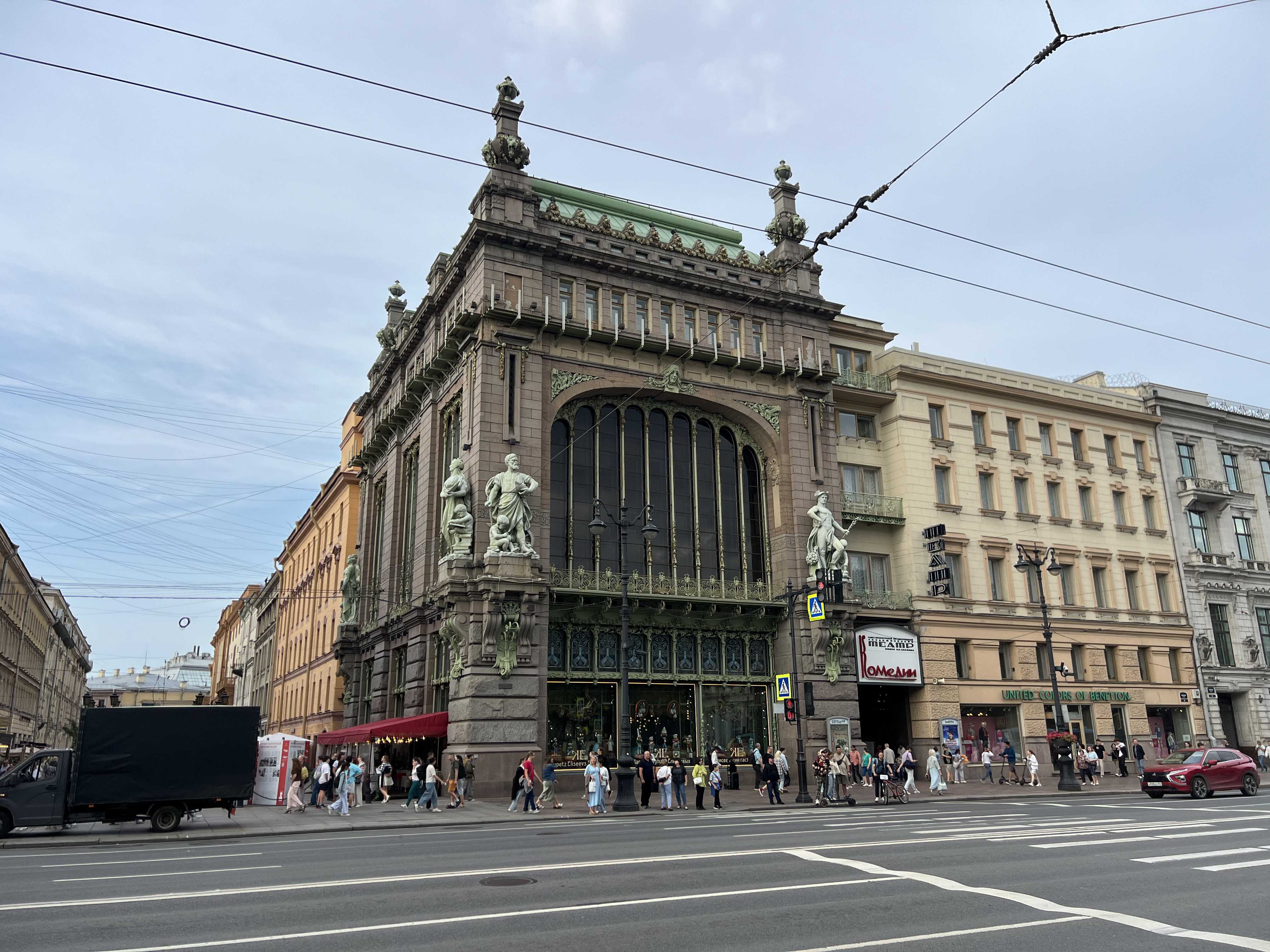
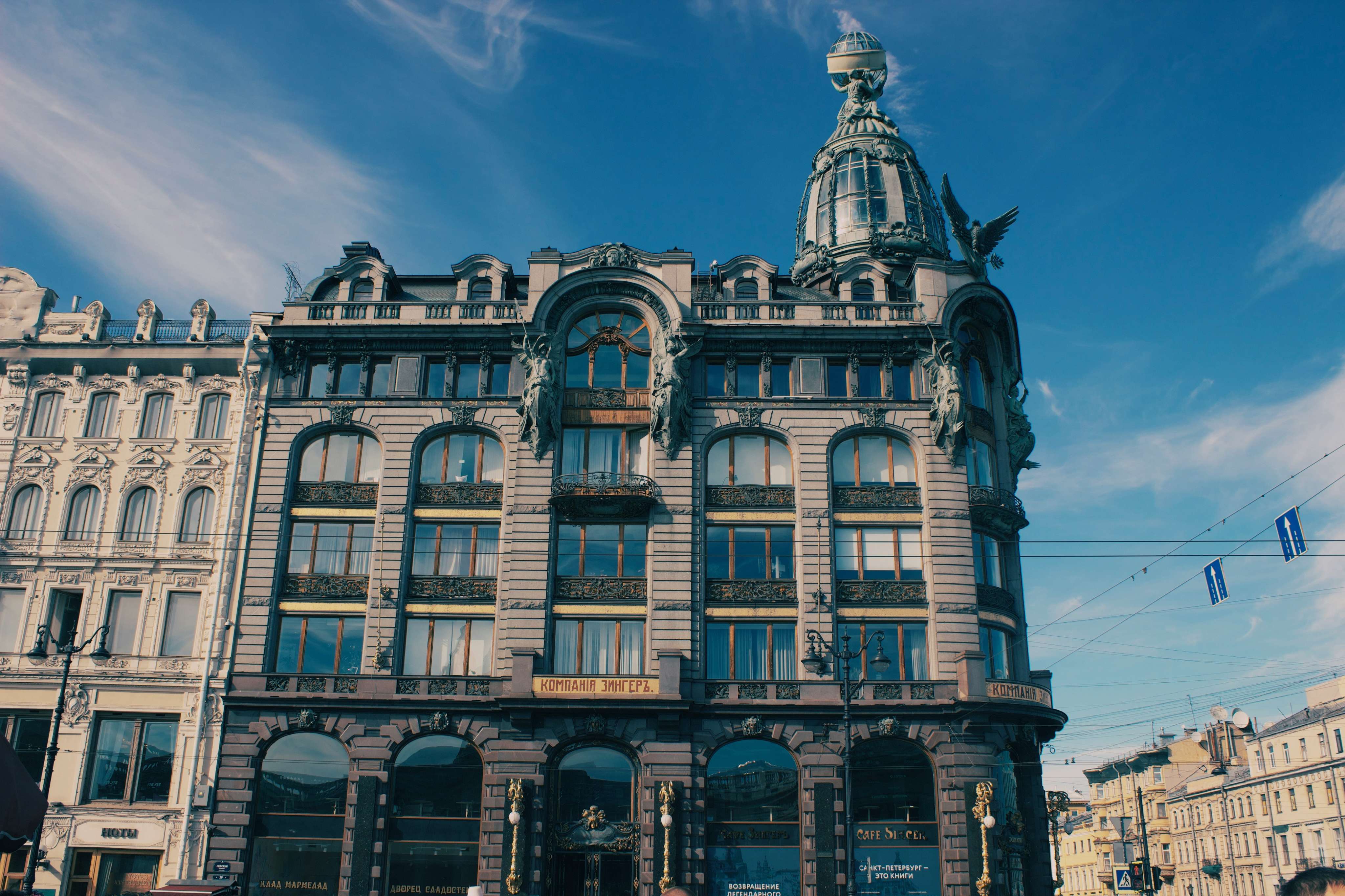
The result was a large, brutal-looking mansion. The monumental structure, faced entirely in gray granite, is designed in the style of the Italian Renaissance; the two-tier arcade on the Nevsky Prospekt side gives it a distant resemblance to the medieval Doge's Palace in Venice. The building caused a loud scandal. Just ten years earlier, the troublemakers of St. Petersburg had been the Singer House and the Eliseev merchants' store, equally unusual, eye-catching buildings. In 1912 the Wawelberg bank continued that line at the very beginning of Nevsky Prospekt.
Myths and Legends
There is a popular city legend about the Wawelberg House. When the bank's owner, Mikhail Wawelberg, was accepting the building, he could find nothing to complain about, but he did make one remark: “Your door has a sign saying ‘Push.’ That's not my principle. Change it to ‘Pull.’”
Today
In Soviet times the building housed, at various periods, the Vitamin Institute, Aeroflot ticket offices, and the St. Petersburg Writers' Union. In the early 21st century the Saigon rock club operated here for a while.
In 2011 the interior of the building began to be rebuilt, and ten years later a hotel called the Wawelberg opened here. So history has come full circle, and the building remains one of the striking landmarks of Nevsky Prospekt.
Nearby
Malaya Morskaya Street
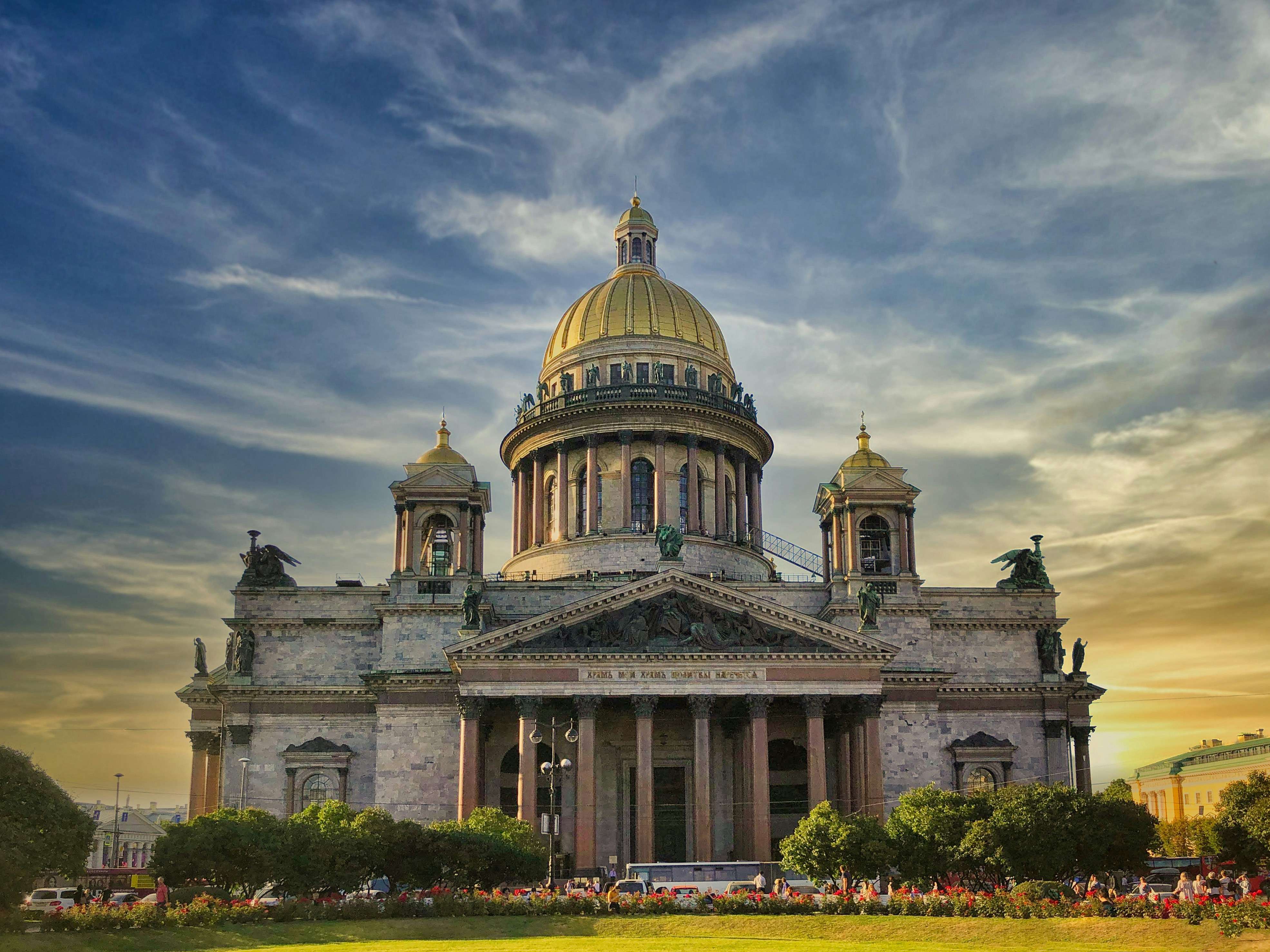
The street that runs from the Wawelberg House to St. Isaac's Cathedral is famous for its architecture in a range of styles, such as Neoclassicism, Neo-Baroque, eclecticism, Neo-Renaissance, and others. It has several landmark houses. For example, the Lepen House, where Gogol lived and wrote for a time. Or the Queen of Spades House, on the corner of Malaya Morskaya and Gorokhovaya Streets, where Natalya Golitsyna lived, the prototype of the heroine of Pushkin's story.
 18 points
 7 km
 1.5 hours