Historical Background
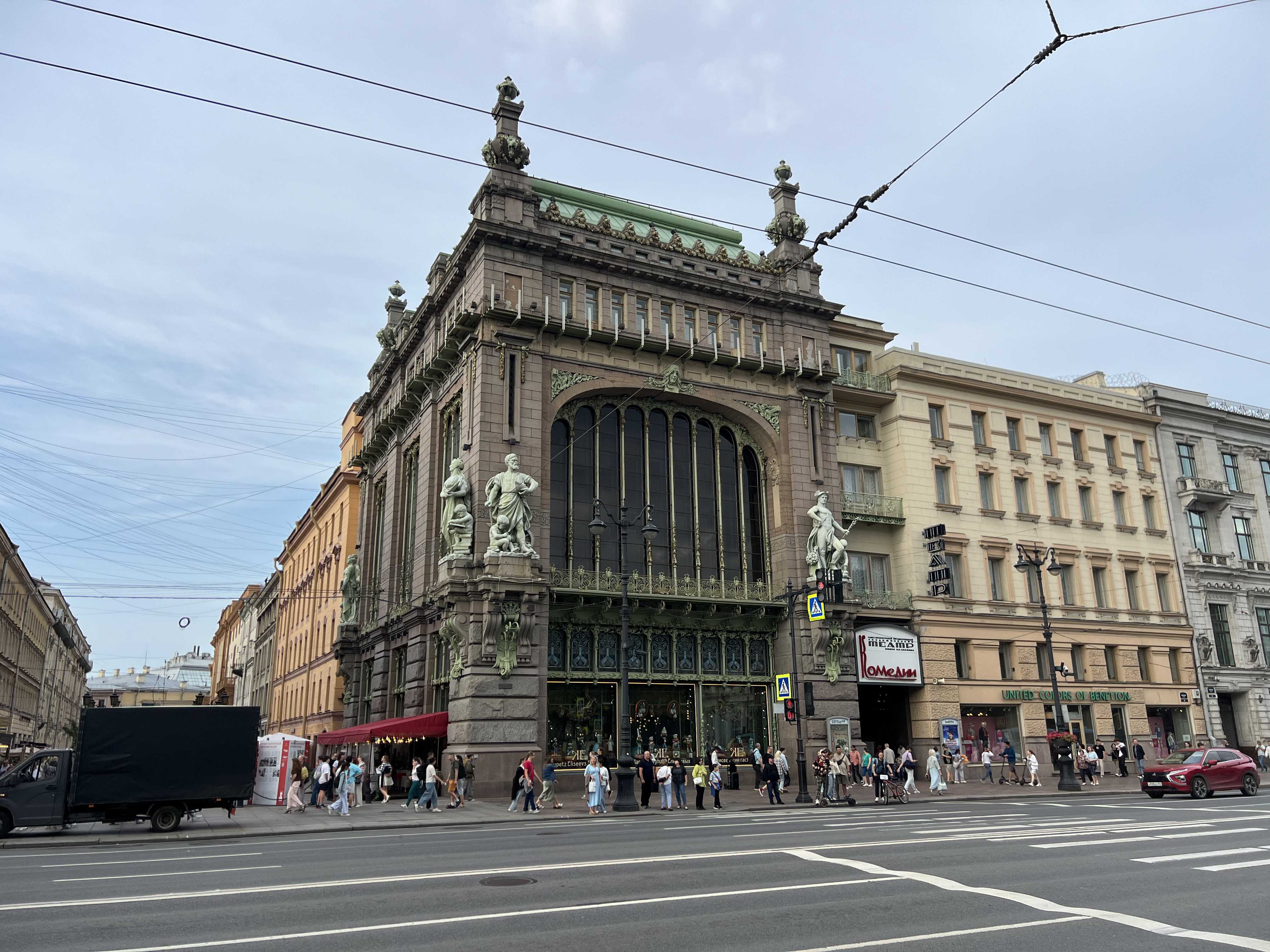
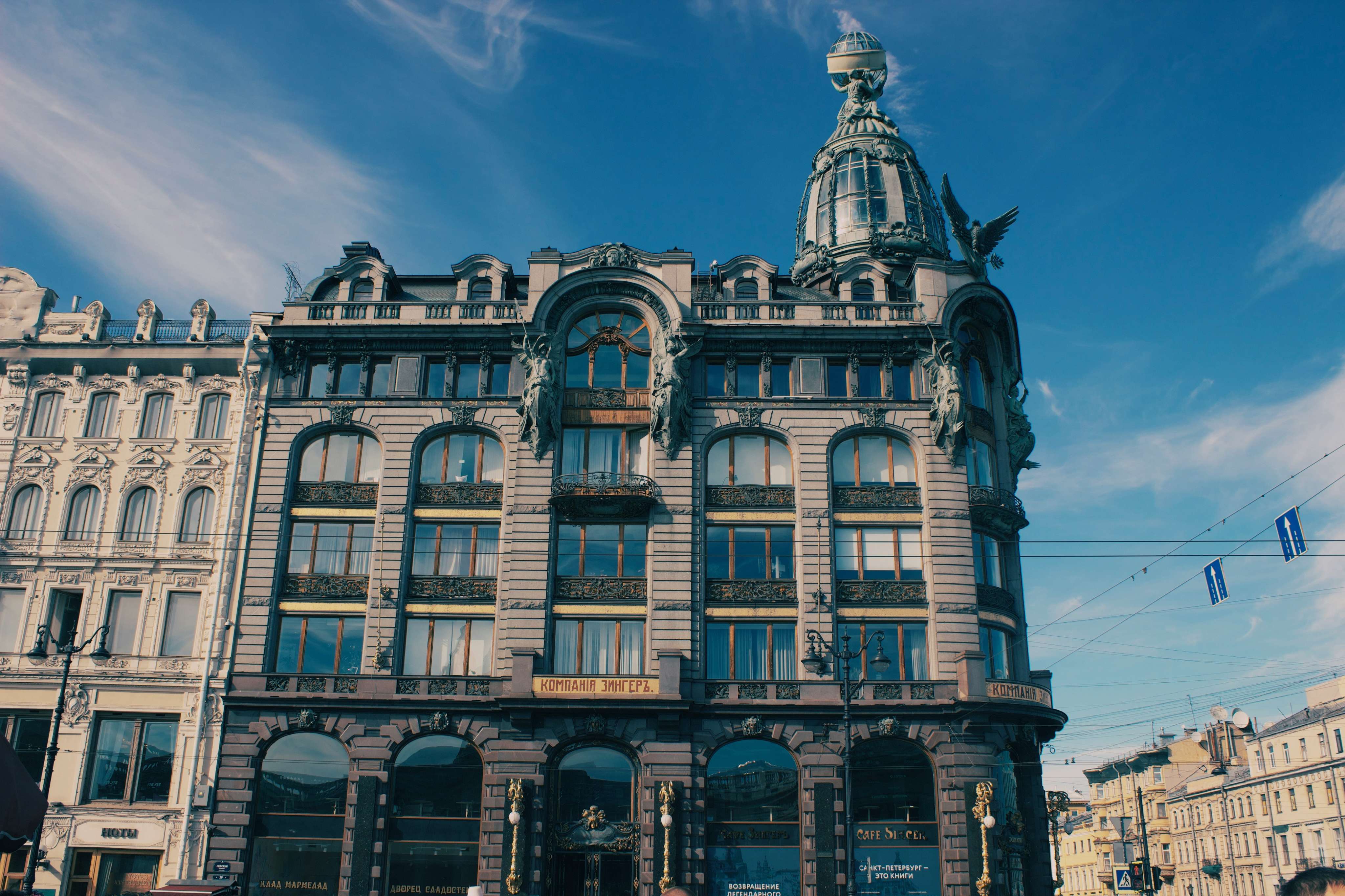
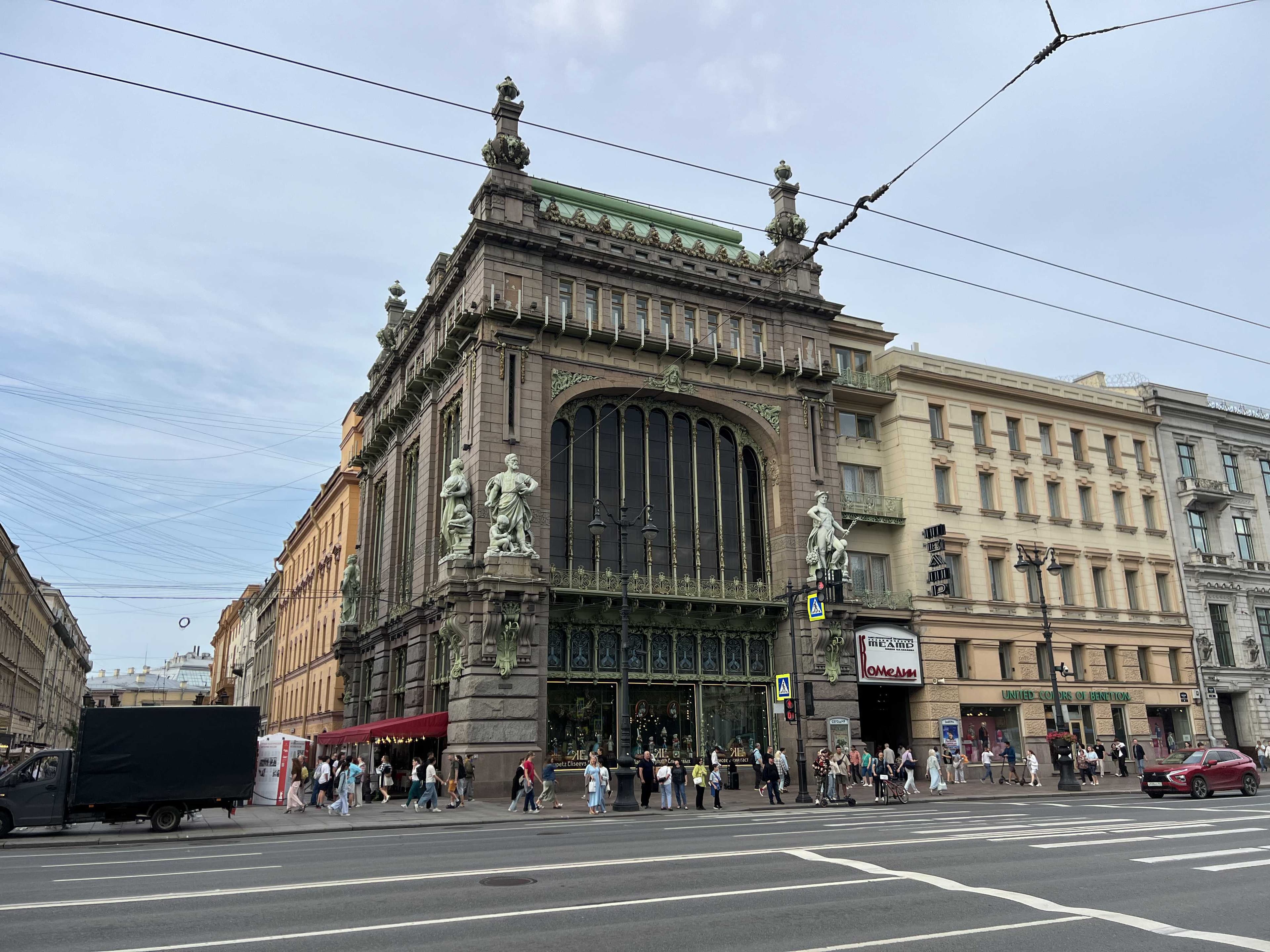
Across Nevsky Prospekt from Ostrovsky Square stands the famous Eliseev store. Today this building on the corner of Nevsky Prospekt and Malaya Sadovaya Street is called one of the finest examples of early Art Nouveau in the city. But a little over a century ago this architectural creation did not delight the people of St. Petersburg. In 1903 the architect Baranovsky rebuilt it as a store of colonial goods for the Eliseev Brothers trading partnership. Locals scolded the building for its pretentiousness, calling it a “monster” and “merchant Art Nouveau.”
Originally the building was Classical in style and did not particularly stand out from the overall ensemble of Nevsky Prospekt. First a three-story house was built here, and in 1863 two more stories were added. In the late 19th century the building changed hands, and in 1900 the Eliseevs commissioned the architect Gavriil Baranovsky to rebuild it.
Architecture
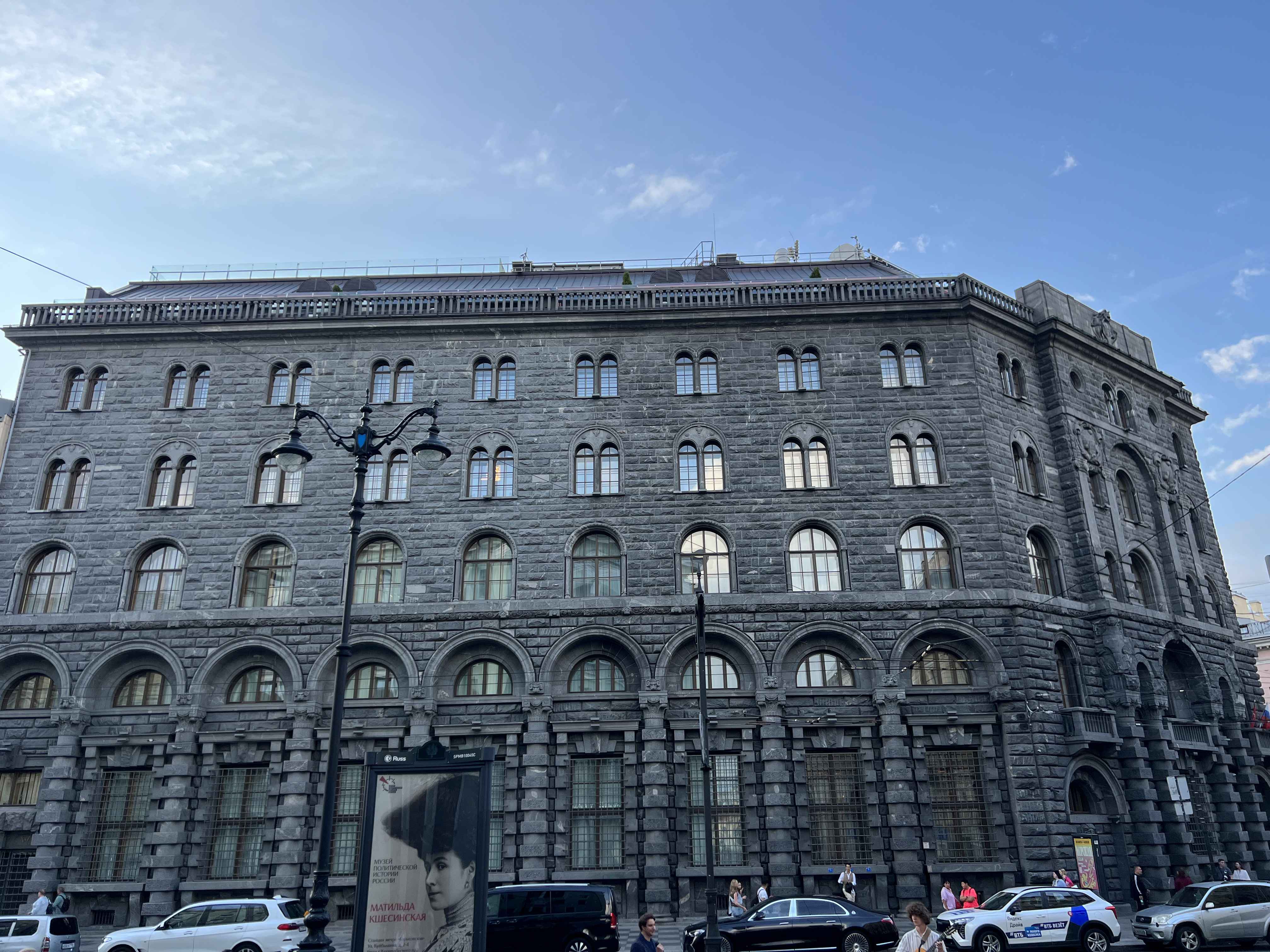
The renewed architecture stands out as a bright spot against the Classical buildings of Nevsky Prospekt, with its stained glass, sculptures, and luxurious finishes. That was the architect's intention: to show off the partnership's wealth and attract customers. Toward Nevsky Prospekt the building presents a magnificent stained-glass window several stories high. The facade also features four sculptures symbolizing Industry, Commerce, Art, and Science.
For the Eliseevs, Baranovsky built several apartment buildings and a mansion on Birzhevaya Liniya; contemporaries even called him “the Eliseevs' house architect.” He not only rebuilt the facades but also reconstructed the buildings in the courtyard, designing them all in a single Neoclassical style. Baranovsky also decorated the facade with rustication, a facing that imitates tightly fitted rough-hewn stones.
The House Before the Eliseevs
The building had various owners. In the second half of the 19th century it had a coffeehouse where members of Narodnaya Volya (People's Will), an illegal political party, often met. The party was revolutionary and sought radical change in the country. Its members believed that the government could be forced to change only through terror, and they repeatedly organized assassination attempts on the emperor and high-ranking officials.
Meeting regularly in the coffeehouse, the members of People's Will often watched the emperor's carriage drive past. Two members of the party, Yakimova-Dikovskaya and Bogdanovich, posing as a married couple named Kobozev, rented a semi-basement here. On paper it was “E. Kobozev's Russian Cheese Store,” but in fact at night the conspirators were digging a tunnel to plant a mine to assassinate Alexander II. They dug the tunnel and planted the mines, but on the day of the attack the emperor took a different route.
By an irony of fate, a different attempt on the emperor succeeded that day: two bombs thrown at Alexander II's carriage ended his life. A few days later it was discovered that the “Kobozevs” had vanished, leaving behind the tunnel they had dug and the mine they had laid.
The Eliseev Store
The building passed into the ownership of the merchant Grigory Eliseev in 1898. The Eliseev store sold imported wines, delicacies, and cigars. Here, for example, you could buy truffles, Belgian chocolate, or oysters.
Nearby
Malaya Sadovaya Street
A small but very cozy pedestrian street, one of the first in St. Petersburg. In the warm season a fountain with a huge granite ball is sometimes set up here. People keep trying to break it, so it is often out of order.
At second-floor level on the building next to the Eliseev house there is a charming sculpture of a cat, nicknamed Elisei. Someone came up with the strange game of tossing coins at the cat; we don't recommend it.
 18 points
 7 km
 1.5 hours