Historical Background
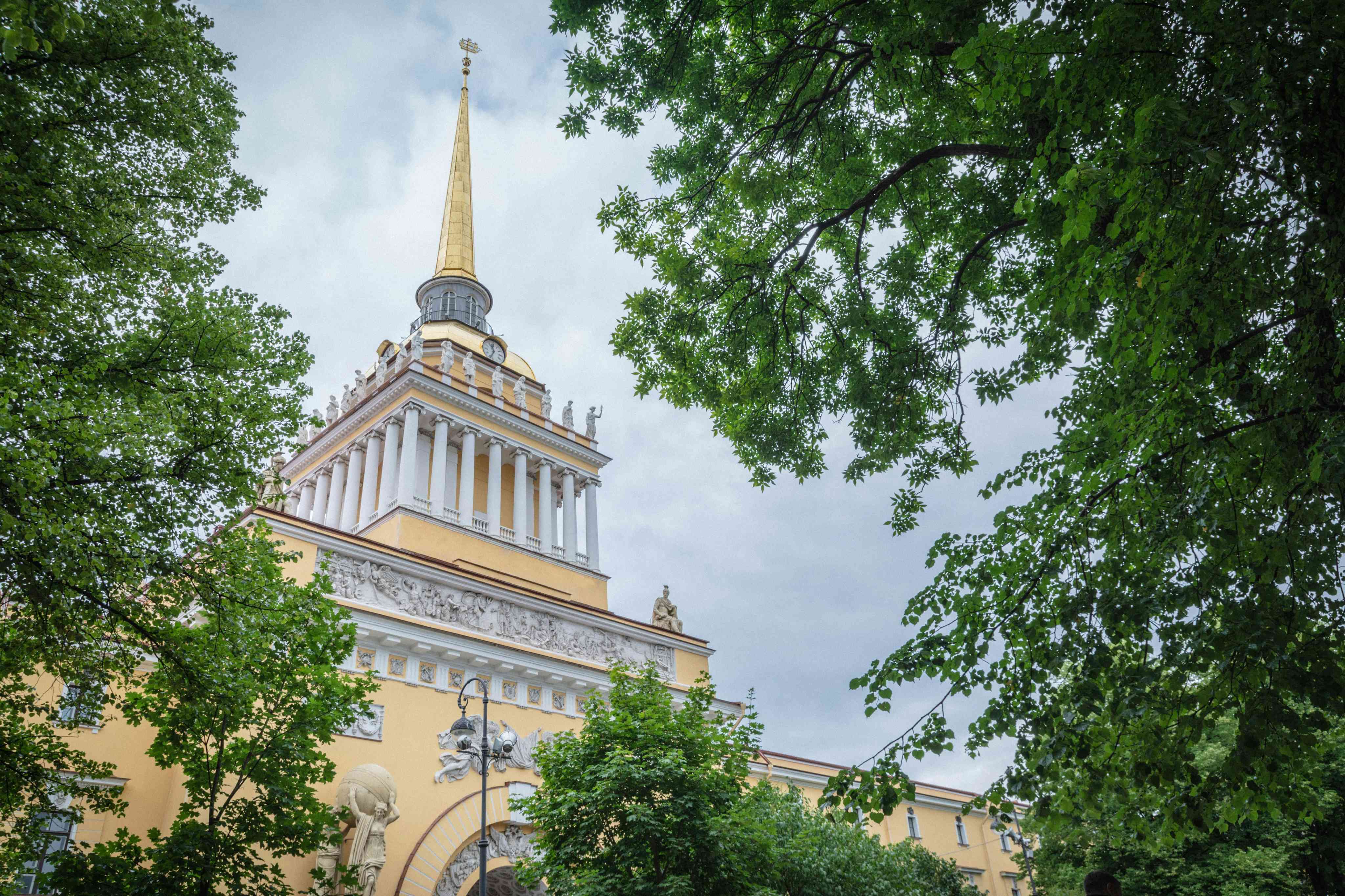
The Main Admiralty building is an iconic structure in the center of St. Petersburg, one of the oldest and most recognizable in the city. It began as a shipyard founded on November 16, 1704, to drawings by Peter I. The organization of the construction fell to Alexander Menshikov, whose chief assistant was Jacob Bruce. The location was chosen for good reason: its proximity to the Neva made it easy to deliver materials by water.
In the early 18th century the city was often threatened by the Swedes, so the future Admiralty was given the features of a fortress: an earthen rampart with bastions and dry moats was built around it, and other houses were permitted only at a considerable distance from the fortifications. To improve the view of the surroundings, a wide meadow was left in front of the rampart; later this area became today's Alexander Garden and Palace, St. Isaac's, and Senate squares.
The First Admiralty
The original building looked modest: a one-story structure in the shape of a very elongated letter U, open toward the Neva. The courtyard held slipways for building ships, warehouses, and workshops. A special canal linked the shipyard with the city's other waterways; it was used to bring timber from New Holland and other building materials.
In 1719 a metal spire with a little ship weathervane was installed above the central gate.
Reconstructions and the Final Design
In the second quarter of the 18th century the complex was rebuilt in stone to a design by the architect Ivan Korobov. An impressive tower with a spire was built in the center, and the status of the surrounding meadow changed: military drills, festivities, and fairs were held there, and later the space was paved.
The Admiralty acquired its present appearance in the early 19th century, when the architect Andreyan Zakharov designed its reconstruction. He kept the U-shaped layout and added a powerful central accent: a tower with a colonnade and a spire 72 meters (236 feet) high, and he stretched the facades along the Neva and the adjoining squares. Zakharov gave the building the features of Russian Classicism and organized a complex rhythm of windows, columns, and portals in the composition of the facades. Many sculptures were used in the decoration: ancient heroes, nymphs, and allegorical figures symbolize the might of the fleet, the seasons, the winds, and the elements.
The building has preserved its grand staircase, assembly hall, and library. After shipbuilding ceased in the mid-19th century, the Admiralty became the main administrative center of the Russian fleet. Today it houses the Main Command of the Russian Navy.
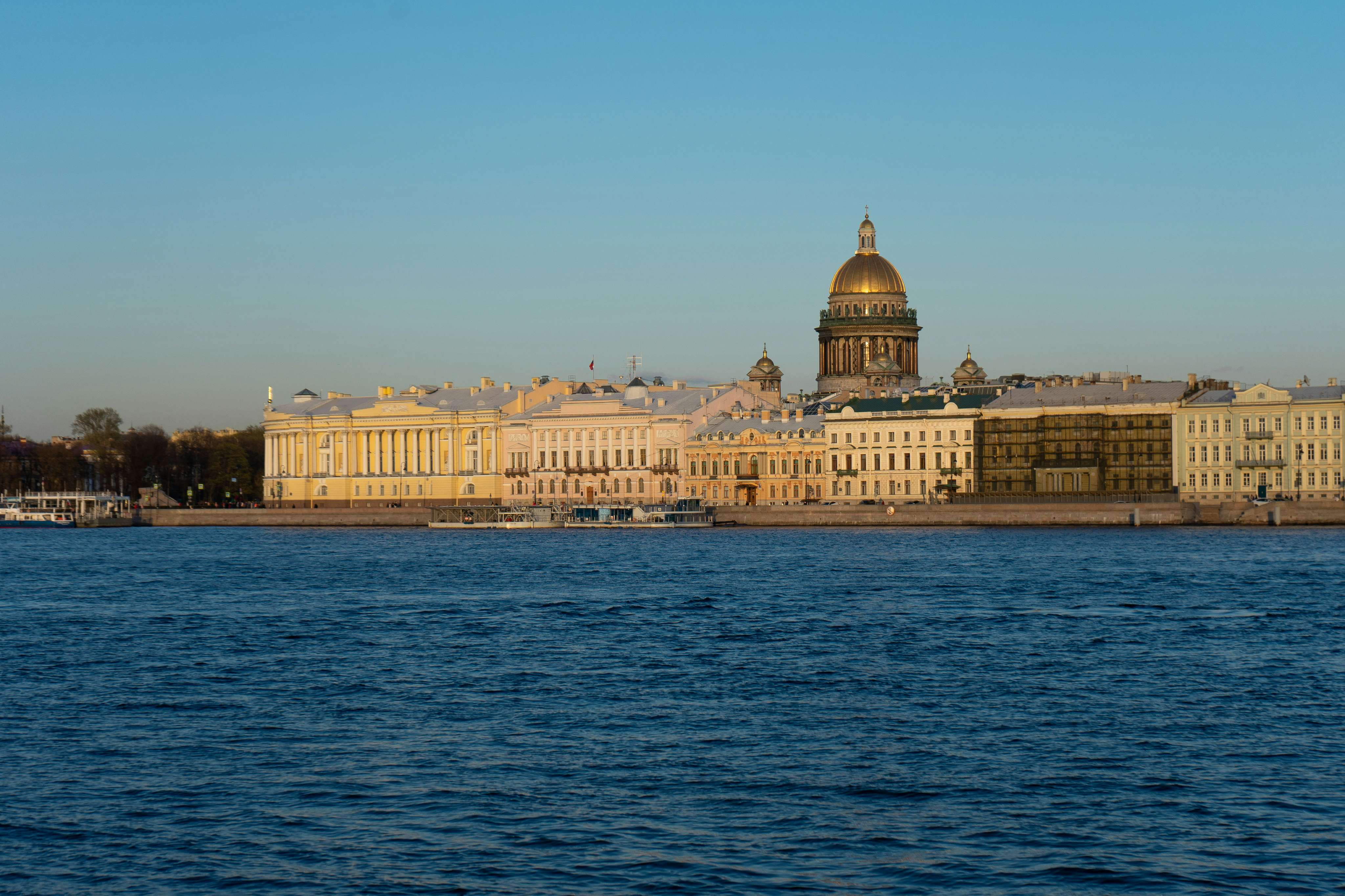
Today the building is surrounded by gardens and the most important sights of the city center. Its facades are decorated with statues and stucco, and in summer a fountain plays by the main entrance.
The Little Ship
The building is recognizable thanks to its spire with the little ship weathervane, an unofficial symbol of the city. Over time it has become one of the symbols of St. Petersburg, along with the Bronze Horseman and the angel atop the Peter and Paul Cathedral.
Nearby
Alexander Garden
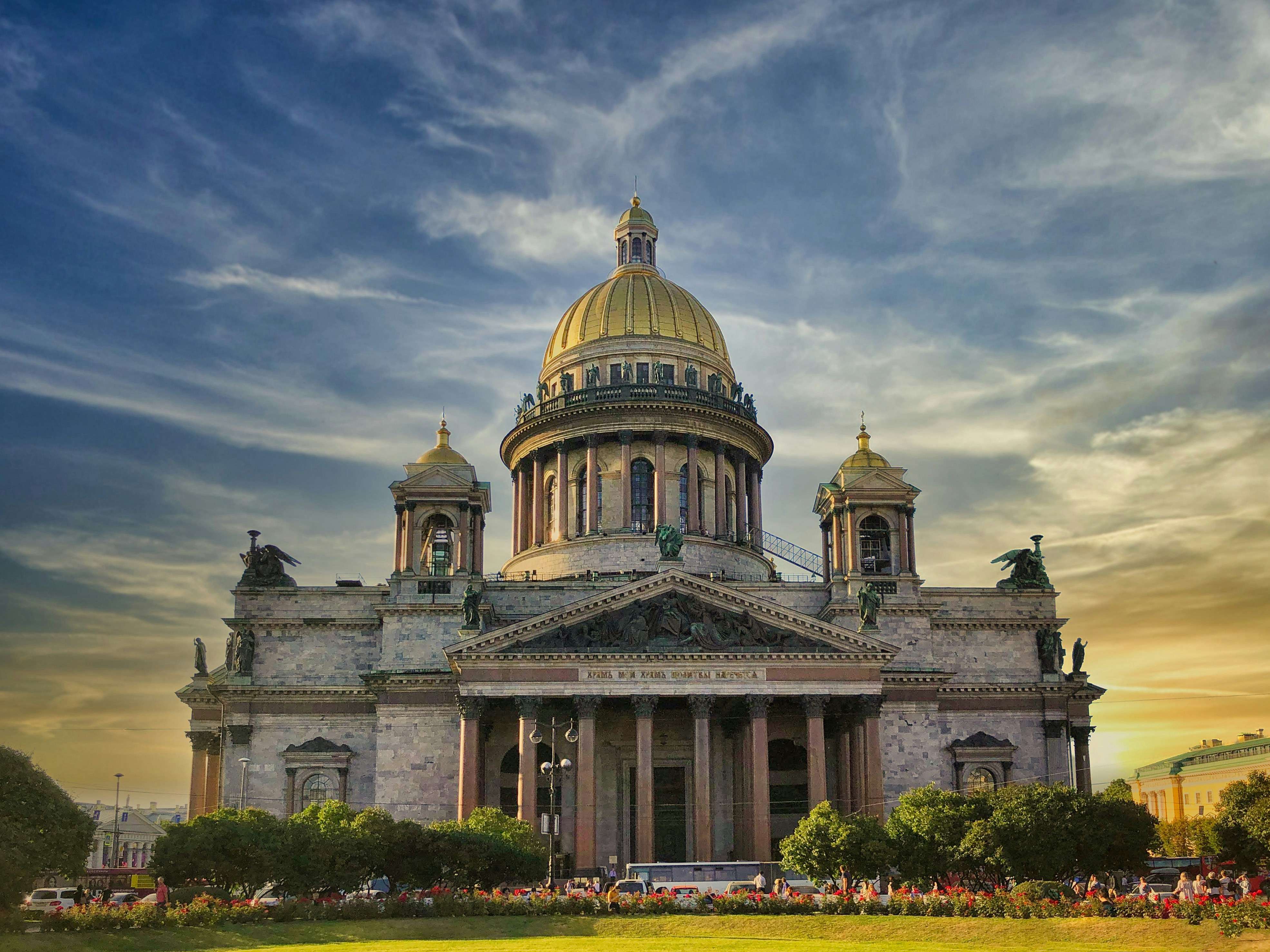
The garden opened in 1874 and is named after Emperor Alexander II. It adjoins the Admiralty and is close to a host of other city sights: the Bronze Horseman, Palace Square, and St. Isaac's Cathedral. As part of the historic center of St. Petersburg, the garden is included on the UNESCO World Heritage List.
 18 points
 7 km
 1.5 hours